

Toughened Engineering Plastic Black Masterbatch Wholesale

Home / Products / Compounding & Modification Black Masterbatch / ABS/PS/PC Toughened Modified Black Masterbatch / Toughened Engineering Plastic Black Masterbatch

Toughened Engineering Plastic Black Masterbatch

Toughened Engineering Plastic Black Masterbatch

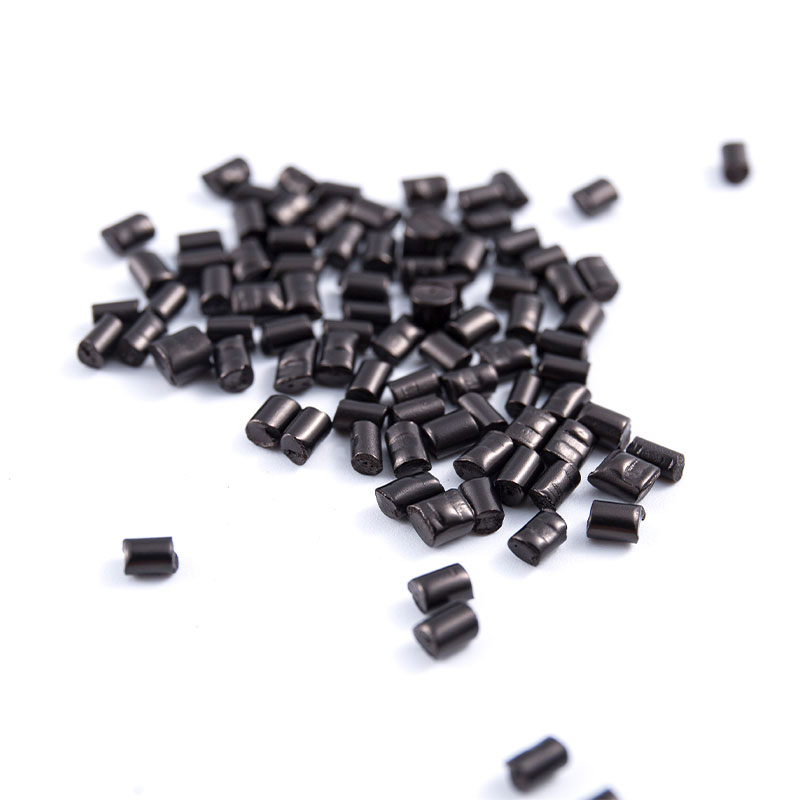
This toughened engineering plastic black masterbatch is suitable for modifying a variety of engineering plastics, including ABS, PS, and PC. This product features a carrier-free design and a carbon black concentration of approximately 65%, ensuring uniform and stable coloring throughout the modified material while maintaining the overall stability of the material's performance. The masterbatch's excellent dispersibility effectively prevents color spots and unevenness, resulting in a more consistent visual appearance in the finished product.
This toughened engineering plastic black masterbatch not only provides a stable black color in the modified material but also enhances the material's mechanical properties, impact resistance, and heat resistance. It is highly adaptable in industrial applications and is particularly suitable for the processing of engineering plastic products requiring both aesthetics and performance. Using this masterbatch simplifies the coloring process, improves production efficiency, and maintains consistent material properties, providing a reliable color solution for engineering plastic products.

Parameter

# BLACK MASTERBATCH SY-65

SY-65 is NO Carrier. Carbon black concentration is around 65%. Applicable for modified materials of ABS, PS and PC engineering plastics.

Ingredients Carbon Black: 45%±2
ASH: <10%
Usage Mixed with materials.
Dosage suggested 1-3%.
Technical Index Density: <2.0g/cm3
Moisture:<0.50%
Package 25kg per bag, KP bag or PE bag
Storage Place in dry and cool warehouse, avoid sun shine and raining.
Note The above index is based on the testing result for reference only, not as the specific index.
ABS / PS / PC Toughened Modified Series

Toughened Engineering Plastic Black Masterbatch — Grade SY-65

Carrier-Free ABS PS PC

SY-65 is the highest-concentration product in E-LUCK's compounding masterbatch range, and the only one designed specifically for ABS, PS, and PC engineering plastic modification. At 65% carbon black with no carrier resin whatsoever, SY-65 delivers pure pigment into the modification compound — no foreign polymer phase, no dilution of the base resin's carefully engineered properties, and no carrier-compatibility trade-off when working across ABS, PS, and PC systems that each behave differently toward common PE or PP carriers.

The carrier-free design means the compounder controls the entire polymer composition of the modified compound. Every kilogram of SY-65 contributes 650 g of carbon black and 350 g of non-polymer binder — typically wax and processing aid — that disperses into the melt without establishing a separate polymer phase. For modification work where mechanical property specifications are tight, this is a meaningful formulation control advantage.

65% Carbon Black — Highest in Range
<10%
Ash Content
None
Carrier Resin
1–3%
Dosage

Technical Data Sheet

SY-65 — Complete Parameter Reference

Parameter Specification Method / Notes
Grade Code SY-65 ABS/PS/PC Toughened Modified Series
Carrier Resin None — Carrier-Free No polymer carrier; binder system only
Carbon Black Content 65% ± 2% Highest CB concentration in E-LUCK compounding range; high-pigment furnace grade
Filler None No CaCO₃ or mineral addition
Ash Content < 10% Inorganic residue from CB ash only; no added mineral
Density < 2.0 g/cm³ ISO 1183
Moisture Content < 0.50% Critical for ABS and PC processing where moisture causes hydrolytic degradation
Recommended Dosage 1% – 3% At 1%: 0.65% CB introduced; significantly exceeds typical coloring threshold for engineering plastics
Compatible Resins ABS, PS, PC (and ABS/PC blends) Validated for modified material systems; confirm for specialty grades
Compatible Processes Engineering plastic compounding (twin-screw), injection molding Not recommended for blown film or PE pipe extrusion
Usage Method Mixed directly with materials in hopper or compound feeder No pre-compounding required
Packaging 25 kg / bag (KP or PE bag) Sealed; dry warehouse, away from UV and moisture

Formulation Logic

Five Reasons SY-65 Is Formulated at 65% with No Carrier

Principle 01
Maximum CB Delivery per Kilogram of Masterbatch Addition

At 65% concentration, every kilogram of SY-65 contributes 650 g of active carbon black to the compound. A 40% grade at equivalent dosage delivers 400 g — 38% less active pigment for the same mass addition. In ABS/PC compounding at 1% letdown, the difference is 6.5 g versus 4.0 g of CB per kilogram of compound. At the scale of a 1,000 kg/hour compounding line, this represents 2.5 kg/hour more active CB from SY-65 at the same masterbatch feed rate — which is either a significant color depth advantage at equivalent dosage, or an equivalent color result at materially lower dosage.

For ABS modification specifically, where the base resin is already an opaque engineering material, the ability to achieve full black saturation at 1% masterbatch addition (versus 1.5–2% for lower-concentration grades) reduces the total non-ABS material in the final compound, preserving a larger fraction of the compound's polymer content as the specified ABS grade.

Principle 02
Carrier-Free: No Foreign Polymer Phase in ABS, PS, or PC

The three target resins for SY-65 — ABS, PS, and PC — all respond poorly to foreign polymer contamination in modification work. ABS is a terpolymer with a rubber phase that gives it toughness; adding PE carrier at even 1–2% introduces an incompatible polyolefin phase that can reduce notch impact strength and weld-line integrity. PS is brittle and impact-sensitive; a PE phase acts as a stress concentrator rather than a toughener. PC is semi-transparent and highly moisture-sensitive; a PE carrier phase reduces optical clarity in the compound and creates carrier-moisture interaction risk during drying.

SY-65's carrier-free formulation eliminates all three concerns by eliminating the carrier entirely. The binder system that holds the CB pellet together disperses into the melt during processing without establishing a measurable separate polymer phase — at 1% dosage, the binder fraction in the final compound is so small that its mechanical contribution is negligible against the base resin properties.

Principle 03
Multi-Resin Compatibility from a Single SKU

Engineering plastic compounders and modifiers frequently run multiple resin systems on the same line across different production batches — ABS for one product family, PS for another, PC/ABS blend for a third. Stocking separate carrier-matched black masterbatches for each resin system (ABS carrier, PC carrier, PS carrier) creates inventory complexity, MOQ commitments for multiple grades, and risk of cross-grade usage errors. SY-65's carrier-free design means a single stock item is technically appropriate for all three resin systems. The CB disperses via mechanical shear in the twin-screw without the compatibility mediation that a polymer carrier would otherwise need to provide.

Principle 04
Toughening Compatibility: Doesn't Counteract the Modification Objective

ABS and PS modification frequently involves adding impact modifiers — POE, SBS, SEBS — to raise notch impact strength. Adding a PE-carrier masterbatch alongside these impact modifiers introduces additional PE into a compound that may already have a carefully calibrated rubber phase from the modifier. SY-65 adds no polymer other than what is in the binder, which at 1% addition represents less than 0.35% non-CB content in the final compound. This ensures the black colorant does not interfere with the impact modification target, allowing the compound engineer to formulate the toughening system independently of the coloring system.

Principle 05
Dispersion Quality at 65% — Why This Loading Is Achievable

Achieving stable dispersion at 65% CB in a carrier-free system requires more sophisticated compounding than standard pellet masterbatches. SY-65 is produced on equipment configured specifically for high-load CB dispersion: extended mixing zones, controlled shear profiles, and precise temperature management that prevents CB agglomeration during the compounding of the masterbatch itself. The <10% ash specification confirms that the CB loading is genuine — the ash reflects CB's own inorganic residue, not diluting mineral filler used to artificially inflate the CB% claim. When you receive SY-65 at 65% CB, that figure represents actual high-structure carbon black at that concentration, not a blend inflated by mineral addition.


Resin-Specific Guidance

SY-65 in ABS, PS, and PC — What Changes Across the Three Systems

ABS
Acrylonitrile Butadiene Styrene
Typical Process Temp200–240°C
SY-65 Dosage1–2%
Key ConcernWeld-line color uniformity
Moisture Pre-dry80°C / 4h before processing
Carrier-Free BenefitNo PE phase disrupting rubber particle distribution

ABS responds well to SY-65's high CB concentration — 1% dosage produces full black saturation across standard ABS grades. For toughened ABS compounds (ABS + POE rubber), SY-65 avoids adding a competing polyolefin phase that would interact with the rubber phase.

PS
Polystyrene (GPPS / HIPS)
Typical Process Temp180–230°C
SY-65 Dosage1–1.5%
Key ConcernSurface smoothness and gel formation
Moisture Pre-dryStandard PS storage (low hygroscopic risk)
Carrier-Free BenefitNo PE stress-concentration sites in brittle PS matrix

PS is brittle and surface-sensitive. SY-65 at 1% in GPPS delivers full opacity. In HIPS, the rubber phase already present acts as an impact modifier; the carrier-free masterbatch does not interfere with rubber-phase morphology as a PE carrier would.

PC
Polycarbonate
Typical Process Temp240–280°C
SY-65 Dosage1–2%
Key ConcernHydrolytic degradation from moisture
Moisture Pre-dry120°C / 4h required for PC; SY-65 at <0.5% not the limiting factor
Carrier-Free BenefitNo PE carrier phase reducing optical clarity or impeding PC chain mobility

PC requires the most careful moisture management of the three. SY-65's <0.5% moisture is acceptable at 1% dosage (adds only 0.005% moisture to PC blend). Pre-dry PC resin to <0.02% before blending. At 240–280°C, SY-65's binder system disperses fully without decomposition.


Technical FAQ

Engineering Plastic Compounders Ask About SY-65

What holds the SY-65 pellet together if there is no carrier polymer?+

Carrier-free masterbatches achieve pellet cohesion through a non-polymer binder system — typically a combination of high-molecular-weight waxes and surfactant dispersants that coat the CB particles and hold them in pellet form at room temperature. These binders have much lower melting points than engineering resins (typically 60–100°C) and disperse rapidly when the pellet enters the hot barrel during processing. At 200–280°C processing temperatures, the binder is fully molten and the CB disperses into the base resin melt via shear. The binder fraction in SY-65 accounts for approximately 25–35% of the pellet weight (the balance after CB and ash); at 1% dosage, the binder contribution to the final compound is 0.25–0.35%, which is a trace quantity with no measurable effect on the mechanical or optical properties of the modified engineering plastic.

Can SY-65 be used in ABS/PC blends, or only in pure ABS or PC?+

SY-65 is fully compatible with ABS/PC blends, which are widely used in electronics housings and automotive interior parts. The carrier-free formulation is actually better suited to ABS/PC blends than carrier-based alternatives: PC is miscible with ABS in these blends, and introducing a third polymer phase (PE or PP carrier) risks creating a separate immiscible domain at the ABS/PC interface that could reduce the blend's characteristic impact strength and clarity. SY-65's binder system disperses uniformly across the ABS/PC blend melt without establishing a competing polymer phase. Process at the standard ABS/PC blend temperature range (240–260°C), pre-dry the base blend to <0.02% moisture, and add SY-65 at 1–2% for full black saturation.

Why is the ash specification <10% rather than <1% as in E-LUCK's cleanest grades?+

The <10% ash specification in SY-65 reflects the natural inorganic residue content of the carbon black itself at 65% loading — not the presence of added mineral filler. High-concentration carbon black, when ashed in a muffle furnace at 600°C, leaves behind a small percentage of inorganic residue inherent to the CB manufacturing process (silica, metal oxides from the reactor). At 65% CB loading, even a 1–2% inherent CB ash content produces an aggregate masterbatch ash of approximately 0.65–1.3% from the CB fraction alone. The <10% ceiling provides a specification range that encompasses batch variation in CB inherent ash without implying mineral filler is present. There is no CaCO₃ or silica filler added to SY-65. At 1% dosage into the final compound, the ash contribution from SY-65 is 0.06–0.10% — below the detection limit of most routine compound ash testing.


ABS / PS / PC Modification — Trial SY-65 Carrier-Free
Send your base resin grade, modification formula outline, and twin-screw configuration. Our technical team will confirm SY-65 compatibility and recommended dosage for your compound specification.
About Us
E-LUCK .
E-LUCK .

As China Toughened Engineering Plastic Black Masterbatch Factory and China Toughened Engineering Plastic Black Masterbatch Suppliers, E-LUCK is a professional manufacturer and solution provider specializing in black masterbatch for industrial applications. Since our founding, we have remained committed to the core values of precision, consistency, and material intelligence, integrating advanced dispersion technology with rigorous quality systems to meet the increasingly complex demands of modern polymer processing. From pipes and fittings to automotive parts, from consumer electronics to packaging films, our black masterbatches play a quiet yet critical role in enhancing product appearance, performance, and lifecycle for a wide range of downstream industries.

News

