

Uniform Light-Shielding Modified Black Masterbatch Wholesale

Home / Products / Automotive Black Masterbatch / Automotive Interior Modification Black Masterbatch / Uniform Light-Shielding Modified Black Masterbatch

Uniform Light-Shielding Modified Black Masterbatch

Uniform Light-Shielding Modified Black Masterbatch

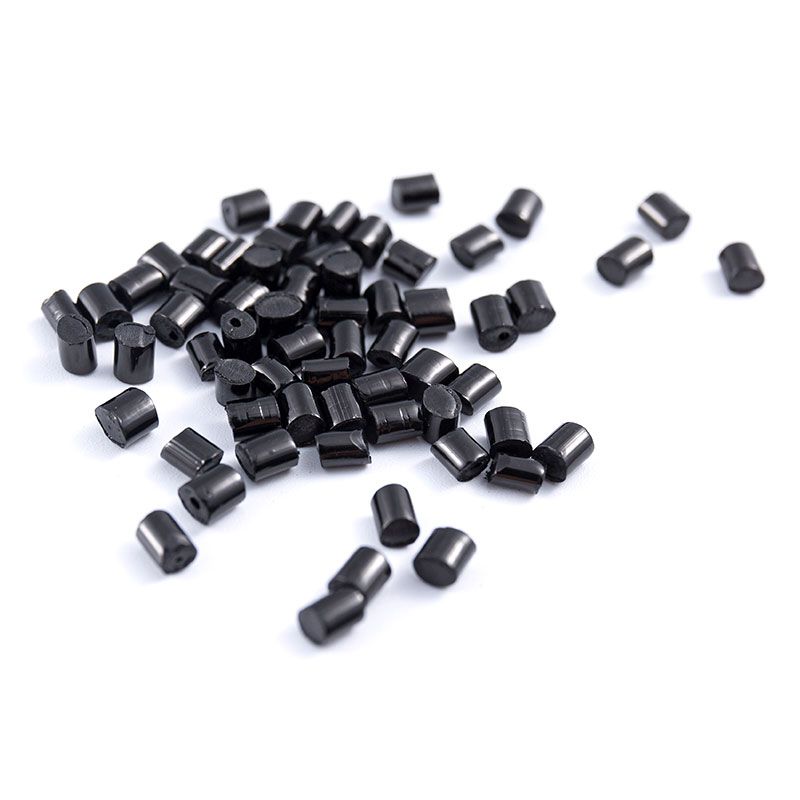
This uniform light-shielding modified black masterbatch is based on SAN resin and contains approximately 45% carbon black, produced through a meticulous process. This masterbatch achieves uniform and stable coloring during the modification and compounding of engineering plastics such as ABS, PS, and PC, while minimizing the impact on the properties of the modified plastic itself. Its excellent dispersibility and compatibility ensure overall uniformity and surface smoothness during processing, making it suitable for a variety of injection molding and extrusion processes.
This black masterbatch strictly controls volatile organic compound (VOC) emissions during production, meeting relevant environmental standards and generating no odor or hazardous gases. Its low VOC content ensures that the resulting molded products pose no risk to the environment or users when used in everyday or industrial applications. For applications with stringent environmental and health requirements, this uniform light-blocking modified black masterbatch is a reliable choice.

Parameter

# BLACK MASTERBATCH AS1045

AS1045 is made of SAN. Carbon black concentration is around 45%.
Applicable for ABS.PS.PC Modified, Compounding.

Ingredients Carbon Black: 45%±2
ASH: <1%
Usage Mixed with materials.
Dosage suggested 1-3%.
Technical Index Density: <2.0g/cm3
Melting Speed:>10g/10min(5kg/220℃)
Moisture:<0.50%
Package 25kg per bag, KP bag or PE bag
Storage Place in dry and cool warehouse, avoid sun shine and raining.
Note The above index is based on the testing result for reference only, not as the specific index.
Interior Modification · SAN-Based Carrier

Why Modifiers Specify AS1045 for Light-Critical Interior Parts

Interior components sit closer to the cabin occupant than almost any other plastic part in a vehicle, which changes what "black" needs to mean. A dashboard substrate, an HVAC vent, or a backlit switch housing has to block stray light evenly across the entire surface — no thin spots, no grey haze near gate marks, no shift in tone between the first shot of a run and the last. AS1045 was formulated around that specific problem: a SAN-based carrier loaded with roughly 45% carbon black, engineered to disperse evenly through ABS, PS and PC during compounding so opacity stays consistent part after part.

Because interior trim also sits inside a sealed cabin, resin selection and process control are only half the story — odor and volatile emissions matter just as much as color. Every production batch of AS1045 is checked against low-VOC targets before release, so modifiers supplying interior-trim tiers do not have to re-test incoming masterbatch before it enters their own compounding line.

Typical light-shielding coverage at recommended dosage (1–3%)
≈ 97–99%
TranslucentFull opacity
Illustrative performance range based on internal dispersion testing at standard dosage; actual results depend on host resin, wall thickness and processing conditions.

Where This Grade Is Actually Used

01

Dashboard & Instrument Panel Substrates

Even light-blocking behind gauge clusters and trim caps prevents backlight bleed-through at the panel edges.

02

HVAC Vents & Ducting

Stable coloring through long, thin-walled duct geometries without visible streaking near injection gates.

03

Door Panels & Interior Trim

Matches large flat surfaces where any tonal drift between cavities would be visible under cabin lighting.

04

Backlit Switch & Button Housings

Blocks ambient light around illuminated icons so only the intended symbol glows through.

AS1045 Against a Generic Carbon Black Masterbatch

Performance Factor Generic Black Masterbatch AS1045 Light-Shielding Grade
Opacity uniformity across wall thickness Can vary with gate distance Consistent at recommended dosage
Odor / VOC behavior in a sealed cabin Not always screened per batch Checked against low-VOC targets each batch
Dispersion in ABS / PS / PC Carrier resin often mismatched SAN carrier selected for compatibility
Impact on host resin mechanical properties Higher risk at high loading Minimal impact at 1–3% dosage
Batch-to-batch color repeatability Depends on supplier controls Controlled through standardized dispersion process

How Consistency Is Actually Controlled

Carrier Matching

SAN carrier chosen specifically for ABS/PS/PC compatibility rather than a one-size-fits-all base resin.

Dispersion Control

Twin-screw compounding keeps carbon black agglomerates broken down for even coloring, not just black on the surface.

Batch VOC Screening

Volatile emissions checked against low-VOC targets before a batch is released for interior-grade use.

Moisture & Density Checks

Moisture content and density verified per lot to keep melt behavior predictable at the customer's press.

The Dispersion Science Behind Even Opacity

Opacity is not just a function of how much carbon black is in the formulation — it depends on how finely and evenly that carbon black is broken down and locked into the carrier resin before it ever reaches the modifier's compounding line. Poorly dispersed pigment leaves micro-agglomerates that scatter light unevenly, producing the grey haze and thin spots that show up under backlighting. AS1045 is compounded on twin-screw equipment tuned specifically for this carbon black loading, so the pigment structure stays broken down through the full 45%±2 concentration rather than clumping as loading increases.

Carbon black loading
45% ±2
High enough for full opacity at low dosage, without overloading the carrier
Carrier resin
SAN
Selected for melt compatibility with ABS, PS and PC
Ash content
< 1%
Low residual ash keeps the pigment system clean and consistent

Recommended Processing Parameters

These starting points are meant to shorten the trial-and-error phase when a formulation first goes onto a new press. Actual settings should still be fine-tuned against the specific host resin grade, tool design and part geometry in use.

Process Parameter Guideline Why It Matters
Pre-drying 2–3 hours at 80°C for hygroscopic carriers Reduces splay and moisture-related surface defects on visible interior faces
Melt temperature Set to match host resin's standard window Keeps dispersion stable without degrading the carrier or the base polymer
Dosage 1–3% by weight, added at the feed throat or masterbatch hopper Balances full opacity against unnecessary masterbatch cost
Mixing / residence time Sufficient for full letdown before the gate Prevents streaking near thin ribs or long flow-length ducting
Screw speed Moderate — avoid excessive shear heating Protects both dispersion quality and the low-VOC profile of the finished part

Dosage & Host Resin Compatibility

Host Resin Typical Dosage Notes
ABS 1.5–3% Most common substrate for dashboards and door panel skeletons
PS 1–2.5% Good letdown behavior on lower-cost interior trim components
PC 1.5–3% Preferred where higher heat resistance is required near HVAC ducting
PC/ABS blends 2–3% Slightly higher dosage recommended to compensate for blend clarity variance

Manufacturing Capability & Traceability

Batch-Level Testing

Carbon black content, ash, moisture and density verified on every production lot before release.

Retained Samples & COA

Retained samples and a certificate of analysis are kept for each batch to support customer audits.

Custom Carrier Matching

Carrier resin and loading can be adjusted for a specific host polymer outside the standard AS1045 spec.

Trial Batch Support

Small trial quantities are available before committing to a full production order.

Packaging, Storage & Shelf Life

Standard Packaging

25kg per bag in kraft paper or PE bags; palletized packaging available on request for large orders.

Storage Conditions

Keep in a dry, cool warehouse away from direct sunlight and rain to preserve pellet flow properties.

Shelf Life

Best used within 12 months of production when stored under the recommended conditions.

Handling

Reseal opened bags promptly to limit moisture pickup before the material reaches the hopper.

Common Questions From Modifiers

Why use a SAN carrier instead of a universal PE-based carrier?
A SAN carrier blends more predictably into ABS, PS and PC than a generic polyolefin carrier, reducing the risk of poor melt compatibility, surface haze, or localized specking during injection molding of interior parts.
What dosage is recommended, and does it change with wall thickness?
A dosage of 1–3% is the standard starting point. Thinner walls or components requiring near-total light block, such as backlit housings, typically sit toward the higher end of that range; thicker sections can often use less.
Will adding this masterbatch weaken the mechanical properties of the base resin?
At the recommended 1–3% dosage, the impact on impact strength, stiffness and heat resistance is minimal. Because the carrier resin is matched to the host polymer, the modifier does not need to significantly rebalance the formulation to compensate.
Is this masterbatch suitable for backlit icons and illuminated switches?
Yes — that is one of its primary use cases. Even opacity across the housing wall keeps the halo effect controlled so light escapes only where it is meant to, around the printed or laser-etched symbol.
What packaging and storage conditions should we plan for?
Standard packaging is 25kg per bag in kraft paper or PE bags. Store in a dry, cool warehouse away from direct sunlight and moisture to keep the pellets free-flowing and consistent at the hopper.
Can AS1045 be adjusted for a different carbon black loading or a custom carrier resin?
Yes. The 45% loading and SAN carrier are the standard specification, but the formulation can be adjusted for a specific host polymer, dosage target, or opacity requirement outside the standard grade — typically validated with a small trial batch first.
How long can this masterbatch be stored before it should be used?
When kept in a dry, cool warehouse away from direct sunlight and moisture, the material is best used within 12 months of production to keep pellet flow and dispersion performance consistent.
Do you provide a certificate of analysis with each shipment?
Yes. Carbon black content, ash, moisture and density are checked on every production batch, and retained samples plus a certificate of analysis are available to support incoming inspection on the customer's side.
Is a small trial quantity available before ordering a full production batch?
Yes. Trial quantities can be supplied so the masterbatch can be validated on the customer's own press and tooling before committing to larger production volumes.

Modifying ABS, PS or PC for an interior program with strict light-shielding or cabin air-quality requirements? Share your target resin, wall thickness and dosage range and our technical team can propose a matched formulation or a small trial batch before you commit to production volumes.

About Us
E-LUCK .
E-LUCK .

As China Uniform Light-Shielding Modified Black Masterbatch Factory and China Uniform Light-Shielding Modified Black Masterbatch Suppliers, E-LUCK is a professional manufacturer and solution provider specializing in black masterbatch for industrial applications. Since our founding, we have remained committed to the core values of precision, consistency, and material intelligence, integrating advanced dispersion technology with rigorous quality systems to meet the increasingly complex demands of modern polymer processing. From pipes and fittings to automotive parts, from consumer electronics to packaging films, our black masterbatches play a quiet yet critical role in enhancing product appearance, performance, and lifecycle for a wide range of downstream industries.

News

