

Universal High-Efficiency Black Masterbatch Wholesale

Home / Products / Blown Film Black Masterbatch / Courier Bag Black Masterbatch / Universal High-Efficiency Black Masterbatch

Universal High-Efficiency Black Masterbatch

Universal High-Efficiency Black Masterbatch

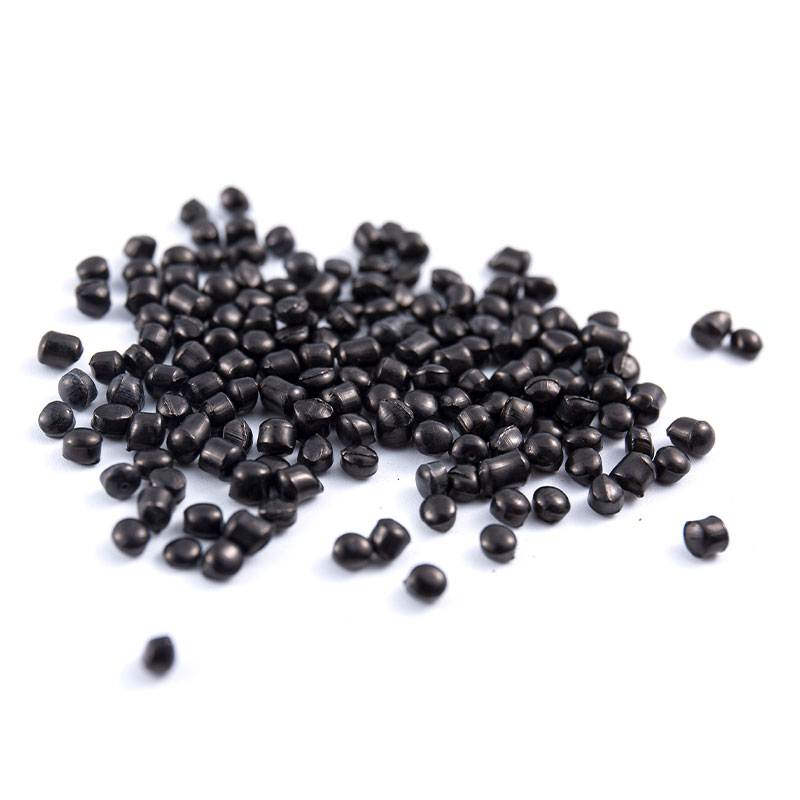
This universal high-efficiency black masterbatch is a functional material based on polyethylene (PE) with a uniform blend of carbon black and a small amount of filler. Its carbon black concentration is approximately 40% ± 2%, and its ash content is controlled within a range of less than 1%, ensuring excellent stability across a variety of processes. Due to its optimized formulation, this masterbatch exhibits excellent adaptability in production methods such as blown film, pipe extrusion, and injection molding, making it suitable for use in the production of various plastic products.
For use, simply mix the masterbatch with the raw materials in the correct proportion. The recommended addition level is between 1-3%, ensuring color concentration while avoiding overdosage, saving costs and maintaining stable product performance. This masterbatch is packaged in 25kg bags, commonly in KP or PE bags, for easy transportation and use. During storage, it should be kept in a dry, cool environment, away from direct sunlight and rain to prevent degradation of material properties.

Parameter

# BLACK MASTERBATCH 6005

6005 is made of PE. Carbon black concentration is around 40%. Applicable for blowing film, pipe extrusion, and injection.

Ingredients Carbon Black: 40%±2
ASH: <1%
Usage Mixed with materials.
Dosage suggested 1-3%.
Technical Index Density: <2.0g/cm3
Melting Speed:>10g/10min(21.6kg/190℃)
Moisture:<0.50%
Package 25kg per bag, KP bag or PE bag
Storage Place in dry and cool warehouse, avoid sun shine and raining.
Note The above index is based on the testing result for reference only, not as the specific index.
Product Overview

Universal High-Efficiency Black Masterbatch — Grade 6005

40%
Carbon Black Concentration
<1%
Ash Content
1–3%
Dosage Rate

Grade 6005 is built around a single engineering principle: put more carbon black into every pellet so that processors need fewer pellets per tonne of finished product. At 40% concentration — double the level of filled or eco-grade masterbatches — 6005 delivers the same jet-black saturation and full UV shielding at letdown rates as low as 1%, making it the lowest-cost-per-unit-of-color option across E-LUCK's blown film range.

Unlike filled grades that rely on calcium carbonate to reach target weight or opacity, 6005 uses a high-purity PE carrier with no mineral fillers, keeping ash content below 1%. This matters most to processors running thin-gauge courier and mailer bags where filler residues can create stress concentrations, reduce seal strength, or interfere with the hot-tack behavior critical for automated form-fill-seal packaging lines.


Technical Data Sheet

6005 — Complete Specification

All parameters verified under in-house QC protocols before each production batch is released for shipment.

Parameter Specification Method / Context
Product Code 6005 Universal High-Efficiency Grade — Courier Bag Series
Carrier Resin Polyethylene (PE) — virgin grade Clean-chain PE; no post-industrial regrind
Carbon Black Content 40% ± 2% High-structure furnace-grade carbon black
Ash Content (Filler) < 1% No mineral filler; ISO 3451 — critical for thin-film seal integrity
Density < 2.0 g/cm³ ISO 1183
Melt Flow Rate > 10 g/10 min 190°C / 21.6 kg; ISO 1133
Moisture Content < 0.50% Gravimetric / Karl Fischer — critical for surface-finish quality
Recommended Dosage 1% – 3% Blend directly in hopper with base resin
Compatible Resins LDPE, LLDPE, HDPE, PP, and most PE/PP blends Confirm at trial run for specialty or metallocene resins
Compatible Processes Blown Film, Pipe Extrusion, Injection Molding Also suitable for cast film and co-extrusion structures
Packaging 25 kg / bag — KP bag or PE bag Hermetically sealed; palletized on request
Shelf Life 24 months (sealed, original packaging) Longer than filled grades due to absence of hygroscopic CaCO₃
Storage Dry warehouse, shade, ambient temperature No refrigeration required; avoid direct UV exposure

Technical Rationale

Why Concentration Is the Most Important Number on This Data Sheet

The word "high-efficiency" in the product name carries a precise engineering meaning — it is not a marketing descriptor. Four mechanisms link the 40% carbon black loading directly to production economics and film performance.

Lower Masterbatch Consumption Per Tonne of Film

At 40% CB concentration, a processor running a 2% letdown uses 20 kg of 6005 per tonne of finished film. An equivalent 20%-concentration masterbatch requires 40 kg to deliver the same color strength — doubling the mass of additive flowing through the hopper, the extruder, and the die. Every kilogram of masterbatch saved is a direct reduction in material cost with no change to the finished film specification.

Reduced Throughput Disruption from Additive Variability

Fewer kilograms of masterbatch entering the blend means smaller absolute variation in carbon black delivery if the blending system has even minor gravimetric error. A ±0.1 kg weighing variance at 1% letdown of 6005 introduces far less color deviation than the same error at 2% letdown of a 20% grade. This translates to tighter color consistency across long production runs without increasing QC sampling frequency.

Purity Effect: Ash Below 1% in the Finished Film

Because 6005 contains no mineral filler and is used at 1–2% letdown, the total inorganic residue it contributes to the finished film is typically well below 0.02% by weight. For courier bags running heat-seal jaws at high speed, this near-zero filler introduction means no interference with seal layer flow behavior and no stress-concentration sites that could initiate seal-zone failures under drop or compression testing.

High-Structure Carbon Black and UV Shielding at Gauge

The carbon black selected for 6005 is a furnace-grade high-structure type, characterized by chain-aggregate morphology that creates dense, overlapping shielding networks at lower concentration than standard grades. For courier bags at 25–40 micron gauge — thin enough to transmit some visible light with standard carbon black — high-structure CB achieves full light block at 1.5–2% dosage, whereas lower-structure pigments may require 3–4% to reach the same optical result.


Dosage Guide

How Dosage Rate Scales with Film Gauge and Opacity Target

The table below shows the relationship between film gauge, target opacity level, and recommended 6005 addition rate. All figures assume LLDPE base resin at standard blown film conditions.

Film Gauge / Application
Relative Color Demand
6005 Dosage
Thin courier bag (15–20 µm)
2.5–3%
Standard mailer bag (25–35 µm)
1.5–2.5%
Shopping bag (30–50 µm)
1–2%
Pipe extrusion (general black)
1–1.5%
Injection molded parts (black finish)
1–2%
Heavy stretch/pallet wrap (>50 µm)
1–1.5%

Dosage ranges are indicative. Actual rates depend on base resin, line conditions, and opacity requirements. Request a technical trial guide for your specific setup.


Market Context

What E-Commerce Logistics Demand from a Courier Bag Masterbatch

Global parcel volumes have expanded sharply over the last decade, and courier bag converters operate under pressures that general packaging film producers rarely face at the same intensity: bags are inspected visually by recipients and delivery staff, subjected to automated sortation machinery that applies compressive and shear loads, and printed by customers with brand graphics that require a predictable, jet-black baseline. A masterbatch that performs inconsistently under any of these demands generates rejections, brand complaints, and reprints.

The critical converter requirements for courier bag production fall into three areas. First, color consistency: a batch-to-batch Delta-E deviation visible to the eye undermines the printed brand on the bag surface. Second, film mechanical integrity: courier bags must pass burst, puncture, and drop tests without pin-hole or seal failures introduced by filler particles or moisture-related voids. Third, printability: the film surface must be chemically inert and dimensionally stable enough to accept flexographic or gravure inks in continuous roll production.

Grade 6005 addresses all three requirements through its formulation choices: high-structure carbon black for color consistency, filler-free carrier for clean mechanical properties, and sub-0.5% moisture for void-free film surface. These are not theoretical benefits — they are the outcome of formulating specifically for high-speed, high-scrutiny packaging production rather than for bulk commodity coloring.

Courier Bag Performance Benchmarks
Typical bag gauge range 15 – 45 µm
Required opacity (light block) 100% at gauge
Surface treatment (corona) 38 – 42 dyne/cm
Seal strength target > 40 N / 25 mm
Gel count threshold (quality) < 2 / m² at gauge
6005 contribution to ash in film < 0.03% at 2%

Process Compatibility

6005 Across Polymer Processing Methods

The matrix below rates 6005 suitability across common processing methods and resin types. Ratings reflect formulation compatibility under standard conditions — always confirm at trial run for non-standard parameters.

Process / Resin LDPE LLDPE HDPE PP Homopolymer PP Copolymer MDPE
Blown Film Ideal Ideal Good Confirm Good Good
Cast Film Ideal Ideal Good Good Good Good
Pipe Extrusion Good Ideal Good Ideal
Injection Molding Good Good Ideal Ideal Ideal Good
Blow Molding Good Ideal Good Good Good
Profile Extrusion Good Ideal Ideal Good

"Ideal" = primary validated application. "Good" = compatible under standard conditions. "Confirm" = trial advised for specific formulation. "—" = not the primary recommended route; contact technical team.


Formulation Insight

The Significance of Ash Content Below 1%

"
At 2% letdown, a masterbatch with 50% ash introduces 1 kg of inorganic filler per tonne of film. At <1% ash, 6005 introduces fewer than 20 grams — effectively zero in terms of film mechanical behavior.
— Formulation engineering rationale for the 6005 ash specification

In filled masterbatches, mineral content — typically calcium carbonate — acts as an inexpensive bulking agent that brings down material cost per kilogram. The trade-off is measurable: calcium carbonate particles, even at fine micron size, create discontinuities in the polymer matrix. In thick-section products like pipes or heavy injection parts, this is manageable. In thin blown film at 15–40 micron, the same particles represent a proportionally larger interference with film structure.

For courier bag converters, the practical consequences are concentrated in two areas. In the seal zone, filler particles near the heat-seal layer alter local melt viscosity and thermal conductivity, potentially causing variation in seal width and peel strength across the seal jaw. In drop testing, filler-related stress concentrations at particle interfaces are a documented initiator of pinhole puncture failures in bags tested to ISTA or equivalent protocols. Grade 6005 eliminates both risk vectors by removing filler from the formulation entirely.


Product Comparison

6005 High-Efficiency Grade vs. Standard 20% Filled Grade: A Direct Assessment

This comparison is product-category based — not a specific competitor reference. It reflects the trade-offs converters encounter when selecting between high-concentration clean grades and lower-concentration filled grades for courier bag production.

6005 — High-Efficiency Grade (40% CB)
Carbon Black Loading: 40% — highest color strength per gram
Dosage Required: 1–2% for full opacity in most thin-film gauges
Ash / Filler: <1% — no mineral filler, clean polymer matrix
Seal Layer Impact: Negligible — ash introduction <0.03% at 2% letdown
Shelf Life: 24 months — no hygroscopic filler to absorb ambient moisture
Cost per Unit Color: Lower — fewer kilograms needed per tonne of film
Best For: Courier bags, mailer bags, thin film where seal strength and opacity are co-critical
vs
Standard 20% Filled Grade (with CaCO₃)
Carbon Black Loading: 20% — requires higher letdown rate for equivalent color
Dosage Required: 3–5% to match opacity of 6005 at 2%
Ash / Filler: 30–50% mineral — adds inorganic mass to finished film
Seal Layer Impact: Measurable — filler particles alter seal zone thermal behavior
Shelf Life: 12 months — CaCO₃ is hygroscopic, absorbs moisture over time
Cost per Unit Color: Higher net cost once dosage correction is applied
Best For: Shopping bags, garbage liners, heavy-gauge film where filler adds useful stiffness

Quality Assurance

Six Film-Quality Checkpoints Where 6005 Performs

Courier bag converters running quality audits check the following parameters. 6005 is formulated to clear each criterion without requiring process modification.

Full Light Block

Complete opacity — no light transmission when bag is held against a standard 500-lux light source — achieved at 2% dosage in film gauges above 20 µm. Adjust to 2.5–3% for 15–18 µm gauge.

Gel-Free Film Surface

Sub-micron carbon black dispersion means no gel spots or dark streaks visible at 10× inspection magnification under UV lamp. Consistent across full roll width at standard blown film screw speed.

Seal Strength Consistency

Filler-free formulation keeps the seal layer polymer matrix uninterrupted. Seal peel strength across the jaw is uniform to within ±5% at standard heat-seal conditions (150–180°C, 0.3 MPa, 0.5 s).

Color Consistency Run-to-Run

Narrow CB concentration tolerance (40% ±2%) combined with in-house batch testing means Delta-E variation between production batches remains within acceptable range for branded packaging applications.

Printability (Ink Adhesion)

No filler outgassing or surface bloom that would reduce corona treatment adhesion. Film treated to 40 dyne/cm retains >38 dyne/cm after 72 hours, supporting standard flexo and gravure ink adhesion.

Drop and Puncture Integrity

Absence of calcium carbonate stress concentrators eliminates the most common filler-related route to pinhole puncture failure in ISTA 1A drop testing. Validated in internal film samples at 25 µm gauge.


Frequently Asked Questions

Technical and Commercial Questions on Grade 6005

How does a 40% concentration masterbatch reduce total cost versus a 20% grade? +

The cost comparison must be made at equivalent unit color strength, not at equivalent price per kilogram. If a 20%-concentration grade costs X per kg and a 40%-concentration grade costs 1.6X per kg, the 40% grade is still cheaper on a per-unit-of-color basis — because you use half the quantity. In practice, the price premium for high-concentration grades is rarely 2× the base price, meaning the higher-concentration option almost always delivers a lower total masterbatch cost per tonne of finished film. This benefit compounds over high-volume production: for a converter running 3,000 tonnes of film per year at 2% letdown, the difference between 20 kg/tonne and 40 kg/tonne of masterbatch consumed is 60 tonnes of material per year.

Can 6005 be used with metallocene LLDPE (mLLDPE)? +

mLLDPE resins have a narrower molecular weight distribution than conventional Ziegler-Natta LLDPE, which produces higher film clarity, toughness, and seal strength at lower gauge — but also higher sensitivity to additive-related disruptions. The filler-free character of 6005 makes it better suited to mLLDPE than filled alternatives, since there are no mineral particles to interact with the tighter polymer matrix. However, the MFR of 6005 (>10 g/10min at 21.6 kg) is higher than most mLLDPE resins, which means the masterbatch acts as a slight viscosity modifier in the blend — acceptable in most cases but worth verifying at trial before committing to full production. Contact our technical team with your mLLDPE grade and processing conditions for a specific recommendation.

What causes streaking in black blown film, and does 6005 eliminate it? +

Streaking in black blown film has three primary causes: inadequate carbon black dispersion in the masterbatch, moisture-induced vapor streaks from the melt, and contamination from base resin or regrind. Grade 6005 directly addresses the first two. The twin-screw compounding process achieves sub-micron carbon black dispersion, which eliminates dispersion-origin streaks. The <0.5% moisture specification ensures no vapor streaking at the die. The third cause — contamination — is upstream of the masterbatch and requires attention to base resin storage and regrind cleanliness. If streaking persists after introducing 6005 under dry conditions, the root cause is almost certainly in the base resin handling rather than the masterbatch itself.

Is a separate anti-block or slip additive masterbatch needed when using 6005? +

Grade 6005 is a pure color masterbatch — it contains no slip agents, anti-block additives, or processing aids. Whether separate functional masterbatches are needed depends on your base resin and finished bag specification. Black film produced with 6005 at 2% letdown typically shows lower blocking tendency than unfilled film due to the micro-roughness introduced by the carbon black particles at the film surface — but this is not a substitute for a formulated anti-block system on lines where film-to-film blocking is a documented production problem. For courier bags that require easy-open behavior at the production line or for retail end-use, adding a separate slip/anti-block masterbatch at 1–2% alongside 6005 is the standard practice. E-LUCK can supply compatible functional masterbatches on request.

What is the minimum trial order quantity for 6005? +

E-LUCK offers flexible trial quantities for first-time buyers running production validation. For 6005, trial quantities can be arranged from single bag (25 kg) up to full-pallet level, depending on your location and logistics arrangement. Because 6005 is a standard stock grade — not a custom formulation — lead times for trial orders are typically 5–10 working days from order confirmation to factory gate. Contact our sales team with your delivery port and approximate annual volume to receive a trial quotation; we will match the trial pack size to your minimum meaningful production run.

How does the 24-month shelf life of 6005 compare to filled grades? +

The longer shelf life of 6005 — 24 months versus the typical 12-month recommendation for filled grades — results directly from the absence of calcium carbonate filler. CaCO₃ is mildly hygroscopic: over time, stored bags absorb ambient moisture through micro-permeation in the outer packaging, raising the moisture content of the masterbatch pellets beyond the <0.5% specification. This process is accelerated in humid climates or improperly sealed storage. Because 6005 contains no CaCO₃, its sealed moisture uptake rate is significantly lower, supporting a longer on-shelf guarantee. For importers maintaining 6–12 months of inventory, this extended shelf life reduces the risk of out-of-specification material and lowers the frequency of pre-use moisture testing required before production.


Put 6005 on Your Blown Film Line
Request a 25 kg trial bag, download the full TDS, or connect with our technical team to confirm compatibility with your specific resin and process conditions.
About Us
E-LUCK .
E-LUCK .

As China Universal High-Efficiency Black Masterbatch Factory and China Universal High-Efficiency Black Masterbatch Suppliers, E-LUCK is a professional manufacturer and solution provider specializing in black masterbatch for industrial applications. Since our founding, we have remained committed to the core values of precision, consistency, and material intelligence, integrating advanced dispersion technology with rigorous quality systems to meet the increasingly complex demands of modern polymer processing. From pipes and fittings to automotive parts, from consumer electronics to packaging films, our black masterbatches play a quiet yet critical role in enhancing product appearance, performance, and lifecycle for a wide range of downstream industries.

News

