

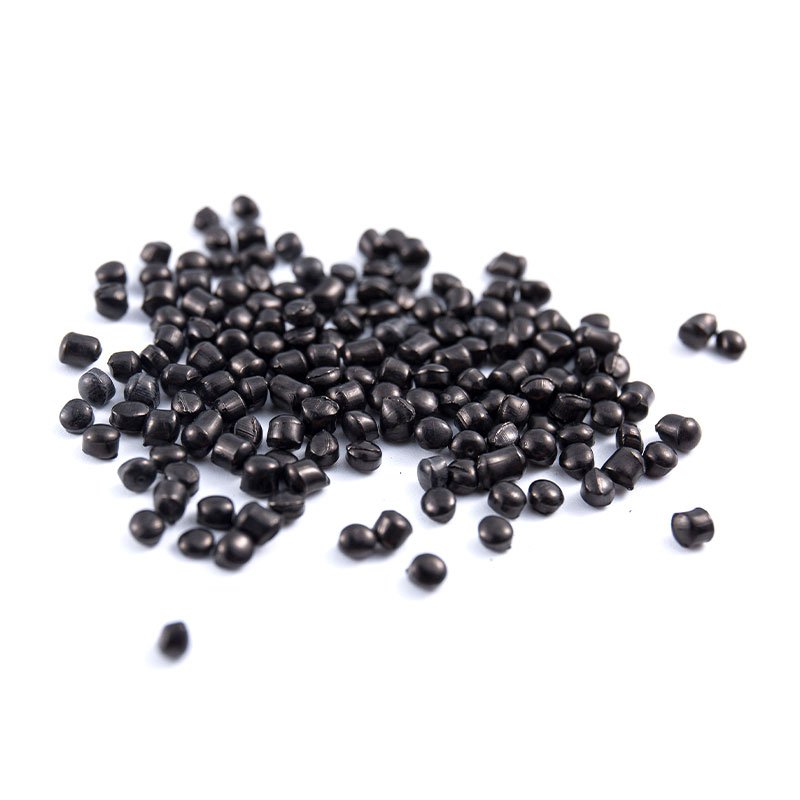

Environmentally Friendly Shatter-Resistant Tableware Black Masterbatch Wholesale

Home / Products / Food Contact Black Masterbatch / Food Grade Tableware Black Masterbatch / Environmentally Friendly Shatter-Resistant Tableware Black Masterbatch

Environmentally Friendly Shatter-Resistant Tableware Black Masterbatch

Environmentally Friendly Shatter-Resistant Tableware Black Masterbatch

This environmentally friendly shatter-resistant tableware black masterbatch is a material specifically developed for food contact products. It complies with relevant food safety standards and meets coloring requirements while ensuring product safety. Composed of polyethylene (PE), carbon black, and calcium carbonate filler, the carbon black concentration is approximately 40% ± 2%, resulting in excellent dispersibility and stability. This product effectively achieves uniform coloring of products such as tableware and lunch boxes, eliminating color variations caused by processing or environmental factors. Its formulation not only prioritizes appearance but also balances structural performance and process compatibility.
This black masterbatch enhances the temperature resistance and shatter resistance of tableware, ensuring it maintains high integrity despite repeated exposure to heat and cold, as well as drops and impacts, reducing the risk of breakage and extending the product's lifespan. The addition of carbon black also enhances the product's adaptability to light and the external environment, reducing fading and aging. Combined with the calcium carbonate filler, the product further enhances stability and mechanical properties while maintaining good processing flow, making it suitable for various processes such as injection molding and thermoforming.

Parameter

# BLACK MASTERBATCH AM3910

AM3910 is made of PE,carbon black with calcium carbonate filler. Carbon black concentration is around 40%.Applicable for FDA Food grade,meal box, etc.

Ingredients Carbon Black: 40%±2
ASH: <11%
Usage Mixed with materials.
Dosage suggested 1-3%.
Technical Index Density: <2.0g/cm3
Melting Speed: >10g/10min(21.6kg/190℃)
Moisture: <0.50%
Package 25kg per bag, KP bag or PE bag
Storage Place in dry and cool warehouse, avoid sun shine and raining.
Note The above index is based on the testing result for reference only, not as the specific index.

Material Guide

What Determines Reliable Black Coloring in Food-Contact Tableware

Beyond the base formulation, three factors decide whether a black masterbatch performs well on a tableware production line: how consistently the pigment disperses batch after batch, how well the resin system tolerates repeated thermal cycles in real kitchen and canteen use, and how easily the supplier can document compliance when a buyer's quality team asks for it. The notes below cover these points in more detail so a molder or brand owner can evaluate this material against whatever they are currently using.

±2% Pigment loading tolerance, batch to batch
1–3% Typical letdown ratio in the host resin
<0.50% Moisture content at packaging
25kg Standard bag unit, moisture-barrier packaging

Color Matching, Not Just "Black"

Jet black, matte black, and blue-black tones can all be produced from the same base system by adjusting the carbon black grade and filler ratio. This lets a tableware brand keep the same visual identity across a bowl, a tray, and a cutlery set molded on different machines or even at different times of year.

Documentation Ready for Audit

Each production lot ships with a certificate of analysis covering pigment loading, ash content, and moisture. Migration test reports and food-contact statements are available on request, which shortens the review cycle for buyers who need to file paperwork before a product can reach retail or foodservice shelves.

Works Across Multiple Resins

While the standard grade is built on a PE carrier, the same pigment system can be re-let down into PP, PS, or PLA-based compounds for molders who run mixed resin lines for reusable dinnerware, cutlery, or compostable meal trays.

Comparison

Dedicated Tableware Formulation vs. General Industrial Black Masterbatch

Attribute Tableware-Grade Black Masterbatch General-Purpose Black Masterbatch
Raw material screening Pigment and filler sourced against food-contact restrictions Sourced primarily on cost and colour strength
Heavy metal control Tested lot by lot against food-contact limits Not routinely tested unless specified
Thermal cycling behaviour Formulated to resist repeated hot-fill and dishwasher cycles Not optimized for repeated heat exposure
Typical end use Bowls, trays, cutlery, meal-prep containers Pipe fittings, casings, structural parts
Supporting documents COA, migration report, food-contact statement Basic technical data sheet only

Where It Is Used

Typical Tableware Categories This Masterbatch Supports

Reusable Bowls & Trays Canteen and school-catering ware that goes through daily wash cycles
Cutlery & Utensils Thin-wall injection parts where flow and surface finish both matter
Meal-Prep Containers Stackable boxes moving between freezer, microwave, and dishwasher
Hospitality Dinnerware Hotel and restaurant serveware where colour uniformity is visible to guests

Common Questions

Frequently Asked Questions

Is black masterbatch safe to use in tableware that touches food?

Yes, when the masterbatch is formulated with pigments and fillers that meet food-contact restrictions and the finished part passes migration testing at the intended use temperature. A general industrial black masterbatch is not automatically suitable for this purpose, which is why a dedicated food-contact grade is recommended.

Why does tableware sometimes fade or turn grey after repeated washing?

Fading usually points to insufficient pigment dispersion or a carbon black grade that is not stable under detergent and heat exposure. Choosing a masterbatch with proven dispersion and light stability reduces this risk over the product's service life.

Can this masterbatch be used with resins other than PE?

The pigment and filler system can be re-let down into PP, PS, or PLA-based compounds. The base grade referenced on this page is built on a PE carrier; other carriers can be arranged for specific tableware projects.

What dosage should a molder start with?

A starting point of 1–3% letdown is typical, then fine-tuned against the target part wall thickness and the required opacity. Trial samples are the fastest way to confirm the correct ratio for a specific mould and machine.

What should be requested before placing a production order?

Ask for the current certificate of analysis, a migration test report relevant to the intended food type and temperature, and a small trial batch to confirm colour and flow on the actual tooling before committing to a full production run.

About Us
E-LUCK .
E-LUCK .

As China Environmentally Friendly Shatter-Resistant Tableware Black Masterbatch Factory and China Environmentally Friendly Shatter-Resistant Tableware Black Masterbatch Suppliers, E-LUCK is a professional manufacturer and solution provider specializing in black masterbatch for industrial applications. Since our founding, we have remained committed to the core values of precision, consistency, and material intelligence, integrating advanced dispersion technology with rigorous quality systems to meet the increasingly complex demands of modern polymer processing. From pipes and fittings to automotive parts, from consumer electronics to packaging films, our black masterbatches play a quiet yet critical role in enhancing product appearance, performance, and lifecycle for a wide range of downstream industries.

News

