

Weather-Resistant And Scratch-Resistant High-Temperature Black Masterbatch Wholesale

Home / Products / Automotive Black Masterbatch / Functional Structural Parts Black Masterbatch / Weather-Resistant And Scratch-Resistant High-Temperature Black Masterbatch

Weather-Resistant And Scratch-Resistant High-Temperature Black Masterbatch

Weather-Resistant And Scratch-Resistant High-Temperature Black Masterbatch

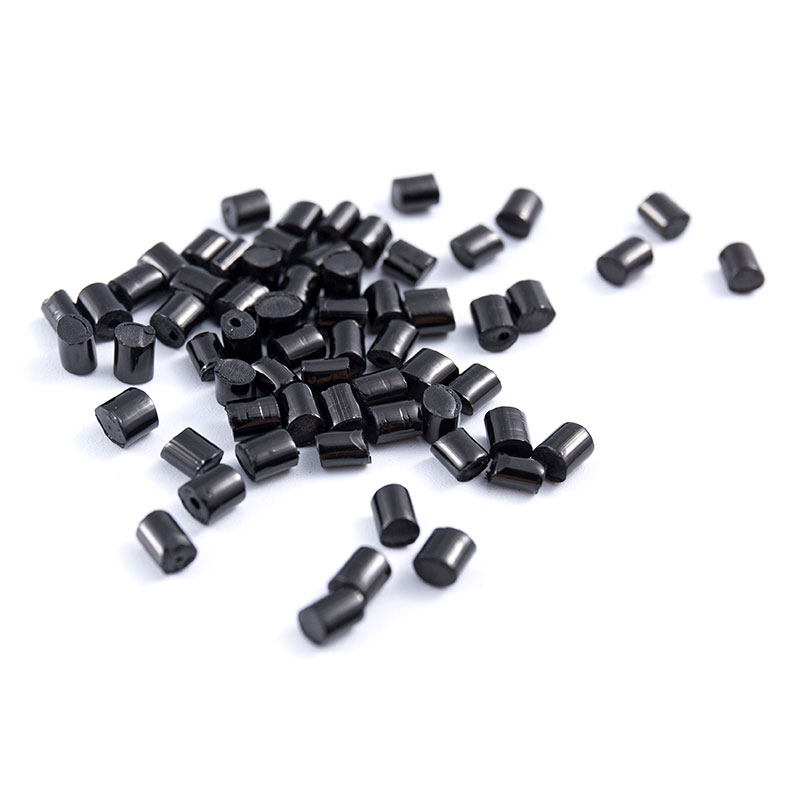
This weather-resistant, scratch-resistant, high-temperature black masterbatch is made from polymethyl methacrylate (PMMA) and contains approximately 10% carbon black. It's suitable for automotive modification parts, grilles, and other applications requiring scratch, aging, and weather resistance. The masterbatch mixes thoroughly with the material during processing, resulting in uniform and stable coloration, enhancing the overall appearance of the finished product while ensuring color consistency. This masterbatch maintains structural stability and durability even in high-temperature and high-friction operating environments, positively impacting the mechanical properties of the material.
This black masterbatch exhibits excellent compatibility with common carriers and allows for stable dispersion during processing, preventing particle aggregation and uneven coloration. The carbon black content is kept within an appropriate range, ensuring not only black covering power but also enhanced UV resistance, ensuring long-term weather resistance. Furthermore, with a moisture content below 0.50%, the masterbatch is less likely to cause bubbles or defects during injection molding or compounding, ensuring surface smoothness and a high-quality finish.
Parameter

# BLACK MASTERBATCH APMA-1

APMA-1 is made of PMMA. Carbon black concentration is around 10%.
Applicable for Automotive Modified, Car Grille, Anti-scratch, Anti-aging.
Weather resistance.

Ingredients Carbon Black: 10%±2
ASH: <1%
Usage Mixed with materials.
Dosage suggested 1-3%.
Technical Index Density: <2.0g/cm3
Melting Speed:>10g/10min(3.8kg/230℃)
Moisture:<0.50%
Package 25kg per bag, KP bag or PE bag
Storage Place in dry and cool warehouse, avoid sun shine and raining.
Note The above index is based on the testing result for reference only, not as the specific index.

Material Guide

Why Exterior Structural Parts Need More Than Just a Dark Colorant

A grille, a modification trim piece, or any structural part mounted outside the cabin lives under conditions a tableware or packaging part never sees: direct sun, road debris, engine-bay heat, and years of contact-abrasion from hands, brushes, or cleaning tools. The notes below explain what actually protects a part's appearance and dimensional stability over that service life, and how to judge a black masterbatch against those requirements rather than against colour strength alone.

10%±2 Carbon black concentration in the base grade
>10g Melt flow per 10min at 3.8kg / 230°C
<2.0 Density, g/cm³, keeps part weight predictable
<1% Ash content for a cleaner melt phase

Built to Hold Colour Under UV Load

The carbon black loading is kept in a range that gives full opacity while also screening the polymer chain from UV breakdown. Parts that sit in direct sunlight for years — grilles, spoilers, exterior trim — need this UV-blocking function as much as they need the black tone itself, or the surface will chalk and dull long before the part reaches end of life.

Resists Marring From Daily Contact

Scratch and mar resistance comes from how well the pigment disperses through the PMMA matrix rather than sitting as loose agglomerates near the surface. A well dispersed system reduces the fine white scratch marks that show up on black parts after routine cleaning, key contact, or light abrasion from road debris.

Stable Through Engine-Bay Heat Cycles

Structural parts near the engine bay or exposed to summer sun on a dark exterior can see repeated high-temperature cycles. This formulation is built to hold its mechanical properties and dimensional stability through those cycles instead of softening, warping, or losing surface gloss.

Comparison

Weathering-Grade Black Masterbatch vs. Standard Colouring Masterbatch

Attribute Weathering-Grade (This Formulation) Standard Colouring Masterbatch
UV / outdoor exposure Engineered for years of direct sun without chalking Not tested for extended UV exposure
Scratch / mar behaviour Fine dispersion reduces visible surface marring Coarser dispersion, marks show more easily
High-temperature stability Holds mechanical properties through repeated heat cycles May soften or discolour under sustained heat
Typical carrier PMMA, compatible with common structural-part resins Varies, often not matched to the end resin
Typical end use Car grilles, exterior trim, modification parts General indoor housings, low-exposure components

Where It Is Used

Typical Structural Parts This Masterbatch Supports

Car Grilles Front-facing parts exposed to full sun, road spray, and grit
Modification & Trim Parts Aftermarket exterior pieces where a deep, even black is part of the appeal
Outdoor Equipment Housings Structural covers exposed to weather cycling outside a vehicle context
High-Friction Functional Parts Components that see repeated hand contact or mechanical rubbing in use

Common Questions

Frequently Asked Questions

Why do some black automotive parts turn grey or chalky after a year outdoors?

This is usually UV degradation at the polymer surface. A carbon black loading that is too low, or a pigment that is poorly dispersed, leaves the resin under-protected from UV breakdown, and the surface starts to chalk well before the part's intended lifespan.

What causes fine white scratch marks on black plastic parts?

Visible marring often comes from pigment agglomerates sitting near the part surface. Finer, more even dispersion through the resin reduces how easily light contact or cleaning leaves a visible mark on the black surface.

Is this masterbatch only compatible with PMMA?

The base grade referenced on this page is built on a PMMA carrier for compatibility with structural and modification parts. The same pigment system can be adapted to other engineering resins for specific structural-part projects.

What dosage should a processor start with?

A 1–3% letdown ratio is the typical starting point, then adjusted against wall thickness, moulding temperature, and the target opacity for the specific part geometry.

How can weather resistance be verified before committing to a production run?

Request accelerated UV exposure data or run a small trial batch on the actual tooling, then compare surface gloss and colour retention against the current material after an equivalent exposure period.

About Us
E-LUCK .
E-LUCK .

As China Weather-Resistant And Scratch-Resistant High-Temperature Black Masterbatch Factory and China Weather-Resistant And Scratch-Resistant High-Temperature Black Masterbatch Suppliers, E-LUCK is a professional manufacturer and solution provider specializing in black masterbatch for industrial applications. Since our founding, we have remained committed to the core values of precision, consistency, and material intelligence, integrating advanced dispersion technology with rigorous quality systems to meet the increasingly complex demands of modern polymer processing. From pipes and fittings to automotive parts, from consumer electronics to packaging films, our black masterbatches play a quiet yet critical role in enhancing product appearance, performance, and lifecycle for a wide range of downstream industries.

News

