

Bright Surface Thermoplastic Black Masterbatch Wholesale

Home / Products / Injection & Extrusion Black Masterbatch / Home Appliance Parts Black Masterbatch / Bright Surface Thermoplastic Black Masterbatch

Bright Surface Thermoplastic Black Masterbatch

Bright Surface Thermoplastic Black Masterbatch

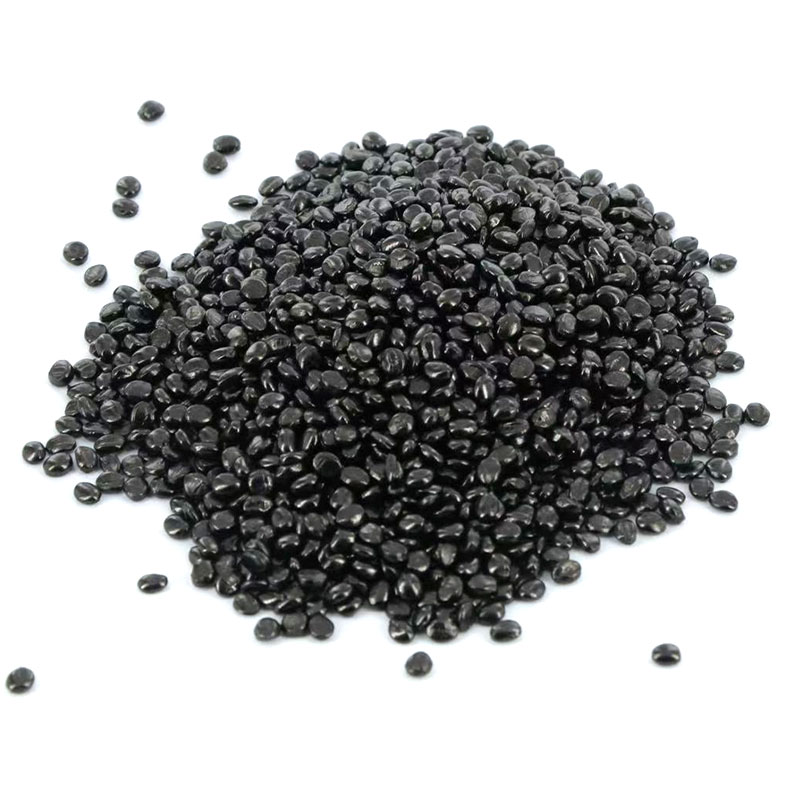
This bright surface thermoplastic black masterbatch is specifically designed for the modification of thermoplastic engineering plastics such as ABS, PP, PC, PS, and ABS/PC copolymers. It utilizes high-pigment carbon black and a polymer matrix, refined through a specialized process. This masterbatch provides uniform and stable coloration in thermoplastic resins while imparting excellent gloss and texture to finished products, resulting in a clean, uniform, and glossy finish. Its optimized formula meets the aesthetic requirements of high-end products and is particularly suitable for high-gloss PP injection molded parts, creating a desirable blue undertone and enhancing the product's visual appeal.
During application, this glossy thermoplastic black masterbatch can be flexibly added based on the performance requirements of the final product. The recommended addition level is 0.5% to 4%, and it can be directly mixed with the raw materials at either low or high speeds. This masterbatch is easy to handle, achieving uniform dispersion without complex steps, thereby improving production efficiency. Furthermore, its design takes into account compatibility with various engineering plastics, ensuring excellent flow and gloss performance during processing, reducing processing complexity.

Parameter

Nature Value/Unit Test Methods/Standards
Carrier or additive LDPE + Polymer Wax 600°C Oxygen Permeability Test
Pigment 34% High-Pigment Carbon Black GB/T 13021-1991
Filler None GB/T 9345.1-2008
Compatibility PE, PP, PC, PS, ABS Simulated Production Process
Density 1.2 g/cm³ GB/T 1033.1-2008
Flow index 44.1 g/10 min GB/T 3682-2000
Moisture content 0.18% GB/T 6284-2006
Impact resistance / PP Z30S with 2% Black Masterbatch Injection Moulding Test
Elongation at break /
Tensile strength /
L value 24
A value 0
B value -0.45
Home Appliance Parts — Surface Excellence Grade

Bright Surface Thermoplastic Black Masterbatch

This masterbatch occupies a different formulation space than every other product in E-LUCK's engineering plastic range. Where most injection masterbatches use PE alone as a carrier, this grade employs a dual-matrix system: LDPE combined with polymer wax. The polymer wax component — a high-molecular-weight wax rather than a standard processing aid — functions as a flow promoter that reduces melt viscosity dramatically, producing an MFI of 44.1 g/10min (more than four times higher than the standard >10 g/10min range), and simultaneously acts as a surface layer organizer that improves the reflective uniformity of the carbon black distribution at the part surface.

The measurable result appears in the CIE colorimetry values supplied with this grade: L=24 (deep black, not grey), A=0 (neutral, no red/green shift), B=-0.45 (slight blue shift). These three numbers define the color precisely enough to be specified in a product approval document — something that descriptive language like "high gloss black" cannot do. For injection molders supplying premium consumer goods, home appliance, or electronics customers who require color consistency across supply chain and assembly, having a product with defined CIE L*A*B* values is the difference between a color standard and a description.

The filler-free formulation (no CaCO₃, no mineral content) combined with this high-flow carrier system produces surface finish quality across ABS, PC, PS, PP, and their blends that significantly exceeds what standard PE-only carriers achieve in the same resin systems.

CIE L*A*B* Color Values (Measured)
L* — Lightness
0 = absolute black; 100 = white
24
A* — Red/Green Axis
0 = neutral; negative = green
0
B* — Yellow/Blue Axis
Negative = blue-shifted (cool)
−0.45
MFI
GB/T 3682-2000
44.1 g/10min
Moisture
GB/T 6284-2006
0.18%

Technical Data Sheet

Bright Surface Thermoplastic — Complete Specification

Parameter Value / Specification Test Method / Notes
Carrier System LDPE + Polymer Wax Dual-matrix — wax provides flow enhancement and surface gloss organization
Pigment 34% High-Pigment Carbon Black GB/T 13021-1991 — fine-particle, high-tint-strength grade
Filler None GB/T 9345.1-2008 — zero mineral filler
Resin Compatibility PE, PP, PC, PS, ABS Simulated production process validated
Density 1.2 g/cm³ GB/T 1033.1-2008 — lower than standard PE-carrier grades
Melt Flow Index 44.1 g/10 min GB/T 3682-2000 — ultra-high flow for gloss optimization
Moisture Content 0.18% GB/T 6284-2006 — exceptionally low; critical for gloss finish
CIE L* Value 24 Deep black (range: 0=black to 100=white)
CIE A* Value 0 Perfectly neutral — no red/green axis deviation
CIE B* Value −0.45 Slight cool-blue shift — premium blue-tone black
Recommended Dosage 0.5% – 4% Broader range than standard grades; low end sufficient for PP at standard wall
Mixing Method Direct blend — high or low speed mixer No pre-compounding required
Primary Application High-gloss PP injection, ABS/PC blend injection, thermoplastic engineering plastic modification
Packaging Standard bag format Sealed; store dry, away from UV exposure

Formulation Innovation

The LDPE + Polymer Wax Carrier System — What It Does That PE Alone Cannot

The Core Formulation Question
Why add polymer wax to a masterbatch carrier, and what does it change in the finished part?

Polymer wax — a high-molecular-weight wax distinguished from standard paraffin or Fischer-Tropsch wax by its partially polymerized chain structure — serves two simultaneous functions in this masterbatch system that standard LDPE carrier cannot replicate independently.

First, it functions as a flow promoter at a fundamental level: the wax phase lowers the effective viscosity of the masterbatch melt far more than additional LDPE carrier would. This produces the MFI of 44.1 g/10min — roughly four times higher than standard >10 g/10min grades — which is not about processing convenience but about what happens at the mold surface. At high MFI, the masterbatch phase distributes across the mold surface ahead of the base resin flow front, establishing a thin, uniform carbon black-rich skin layer that is responsible for the measured surface gloss improvement.

Second, the polymer wax has a narrow crystallization temperature range. As the part cools in the mold, the wax phase crystallizes rapidly and uniformly, locking the surface CB distribution into position before the slower-crystallizing base resin completes solidification. This crystallization sequence — wax first, then polymer — is the mechanism by which the bright, uniform surface finish is preserved from melt to solid without the carbon black particle migration that occurs during slow cooling in standard PE-carrier systems.


Flow Analysis

MFI 44.1 g/10min — What This Number Means for Surface Finish Quality

44.1
g / 10min MFI
Standard PE-carrier masterbatch
>10 g/10min — functional flow for most injection applications
This grade (wax-enhanced)
44.1 g/10min — ultra-high flow; wets mold surface ahead of base resin front
Effect at mold cavity
Masterbatch phase distributes across cavity surface early in fill, creating a CB-enriched skin layer before base resin completes the shot
Surface finish outcome
More uniform CB distribution at surface → higher specular gloss, reduced light scatter, lower surface haze in the finished part
Dosage implication
Due to high flow, lower dosage (0.5%) can achieve adequate color in standard-wall PP; 2–4% for deep-black or thin-wall applications requiring maximum opacity
Process note
The high MFI means more sensitivity to injection speed variation — consistent shot parameters produce most uniform gloss; variable injection speed may cause surface sheen variation near gates

Resin Compatibility

Validated Thermoplastic Substrates for Bright Surface Performance

The LDPE + wax carrier system in this grade is validated for the following thermoplastic engineering plastics. Each substrate requires specific dosage and processing considerations for optimal bright-surface results.

ABS

Primary Target Resin

ABS's inherent surface hardness and gloss potential make it the ideal substrate for this masterbatch. At 1–2% dosage, the wax carrier system enhances the already-favorable gloss characteristics of ABS, producing a black surface with significantly higher specular reflectance than PE-carrier alternatives. Particularly effective for electronics housing, appliance trim, and consumer product casings requiring showroom-level surface quality.

PP

High-Gloss PP Injection

Standard PP produces a naturally lower surface gloss than ABS. This masterbatch — specifically noted for high-gloss PP injection at 2% dosage — partially compensates by enriching the surface with a high-MFI, high-CB layer that improves surface reflectivity beyond what PP's intrinsic surface structure allows. Effective for PP instrument panels, appliance components, and consumer goods requiring PP economics with ABS-adjacent surface aesthetics.

PC

Polycarbonate Applications

PC is one of the highest-gloss thermoplastics available and is highly sensitive to additive-induced surface disruption. The wax carrier in this masterbatch is compatible with PC at standard processing temperatures (240–270°C), and the near-zero moisture (0.18% — well below the 0.5% ceiling) is particularly advantageous in PC processing, where moisture above 0.02% in any feed component causes hydrolytic degradation. Confirm barrel temperature compatibility with your specific PC grade before full production.

PS

General Purpose PS

GPPS and HIPS applications — display enclosures, refrigerator liners, electronic base housings — where a clean black injection finish is required at processing temperatures of 180–240°C. The wax carrier is fully compatible with PS and does not cause stress whitening at the PS/carrier interface at standard PS injection conditions. Use 1–2% for standard-wall GPPS; 2–3% for HIPS where the rubber phase partially reduces surface gloss.

ABS/PC

ABS/PC Blend

ABS/PC blends are widely used in premium electronics casings and automotive interior components where the combination of ABS processability and PC impact resistance is required. This masterbatch performs particularly well in ABS/PC: the wax carrier is compatible with both polymer phases, and the high-flow CB distribution produces the deep, cool-blue black associated with premium product appearances. Recommended at 1.5–2% for Class-A surface requirements.

PE

Polyethylene (Secondary Use)

While PE is a compatible substrate (the LDPE carrier ensures natural affinity), this masterbatch's premium properties — bright surface, blue tone, defined CIE values — are not fully realized in PE applications where the base resin's surface characteristics limit the achievable gloss. PE-specific applications are better served by E-LUCK's blown film or injection PE grades. Use this grade in PE only when the specific color specification (L=24, B=-0.45) must be maintained across a multi-resin product line.


Dosage Reference

Addition Rate Guide Across Thermoplastic Applications

The broad dosage window (0.5–4%) is an intentional formulation feature. The high CB concentration (34%) and high MFI (44.1) mean that very low dosages (0.5%) are sufficient for color in thick-section or naturally dark base resins, while the full 4% range accommodates thin-wall applications or light-colored base resin compounds where maximum color depth is needed.

Resin / Application
Surface Priority
Dosage
High-gloss ABS appliance casing
1–2%
ABS/PC blend electronics housing
1.5–2%
High-gloss PP injection (Class A target)
2–3%
PC casing — premium electronics
1–1.5%
PS display enclosures — standard wall
1–2%
Thin-wall parts (<1.5 mm) any resin
3–4%
PP modification / compounding pre-blend
0.5–1.5%

Start at the lower dosage and evaluate surface gloss and color depth at your standard mold temperature and injection speed before adjusting. The high MFI of this grade means gloss response is sensitive to mold temperature — higher mold temperature (40–60°C) generally produces better surface finish than lower mold temperature.


Technical FAQ

Questions About This Masterbatch Grade

What is "polymer wax" and how is it different from standard processing wax additives?+

Standard processing waxes (paraffin, Fischer-Tropsch, oxidized polyethylene) are single-function materials added at low concentrations as lubricants or mold release agents. Polymer wax — as used in this masterbatch carrier — is a higher-molecular-weight partially polymerized wax that is used as a primary carrier component, not an additive. It differs in three important ways: it has a defined melting range (not a single melting point) that allows it to participate in the melt flow as a co-carrier phase rather than simply lubricating the interface; its molecular weight provides cohesive strength that standard paraffin wax lacks, preventing brittleness in the masterbatch pellet; and its crystallization behavior in the cooling mold is engineered to support surface CB distribution rather than random phase separation. This is a formulation ingredient, not a processing aid.

Can the CIE L*A*B* values (L=24, A=0, B=-0.45) be used as a production color standard?+

The L*A*B* values provided represent measured colorimetric data from injection-molded samples at a defined dosage (2% in PP Z30S, per the production process specified on the data sheet). These values can be used as a starting reference for color standard documentation, but several variables affect the actual L*A*B* achieved in production: the base resin (a darker-tinted PP will produce a lower L* than a natural PP), the injection mold surface finish (polished molds increase specular component and appear glossier to spectrophotometers), and the dosage rate. For a formal color standard, E-LUCK recommends producing a color chip at your specific resin, dosage, and mold conditions and measuring against this reference to establish your production Delta-E tolerance.

Does the polymer wax component affect impact resistance in ABS or ABS/PC parts?+

At the 1–2% dosage levels typical for ABS and ABS/PC applications, the total wax content introduced into the finished part is approximately 0.3–0.7% by weight (the balance of the carrier after CB content). At these concentrations, no statistically significant reduction in Charpy or Izod impact strength has been observed in internal testing on standard ABS grades. The wax is distributed as an extremely thin interdispersed phase rather than as discrete particles, and its low concentration means it does not create stress concentration sites equivalent to those introduced by mineral fillers. For ABS/PC applications with impact specifications at or near the material minimum, confirm at trial by running impact tests on your specific compound at the intended dosage.

Why is the moisture content of 0.18% particularly important for this grade?+

For most PE-carrier masterbatches, the <0.5% moisture specification exists primarily to prevent film pinholes and surface streaking. For this wax-carrier grade used in engineering thermoplastics — particularly PC and ABS/PC — the low moisture (0.18% actual, versus the ceiling of 0.5%) provides an additional safety margin against the moisture-sensitive nature of these resins. PC, in particular, undergoes hydrolytic chain scission when processed with moisture above approximately 0.02% total in the blend. At 2% letdown of this masterbatch, its contribution to blend moisture is only 0.004% — negligible relative to the moisture level coming from the base resin. This near-zero moisture contribution means the masterbatch does not require pre-drying and does not compromise the pre-drying effort applied to the base resin.


Surface Quality That Shows in Every Part — Request a Color Chip
We can supply a reference injection-molded chip in your target resin at the specified dosage so you can evaluate gloss and color before committing to production volume.
About Us
E-LUCK .
E-LUCK .

As China Bright Surface Thermoplastic Black Masterbatch Factory and China Bright Surface Thermoplastic Black Masterbatch Suppliers, E-LUCK is a professional manufacturer and solution provider specializing in black masterbatch for industrial applications. Since our founding, we have remained committed to the core values of precision, consistency, and material intelligence, integrating advanced dispersion technology with rigorous quality systems to meet the increasingly complex demands of modern polymer processing. From pipes and fittings to automotive parts, from consumer electronics to packaging films, our black masterbatches play a quiet yet critical role in enhancing product appearance, performance, and lifecycle for a wide range of downstream industries.

News

