

High Temperature Resistant and High Strength Black Masterbatch Wholesale

Home / Products / Injection & Extrusion Black Masterbatch / Home Appliance Parts Black Masterbatch / High Temperature Resistant and High Strength Black Masterbatch

High Temperature Resistant and High Strength Black Masterbatch

High Temperature Resistant and High Strength Black Masterbatch

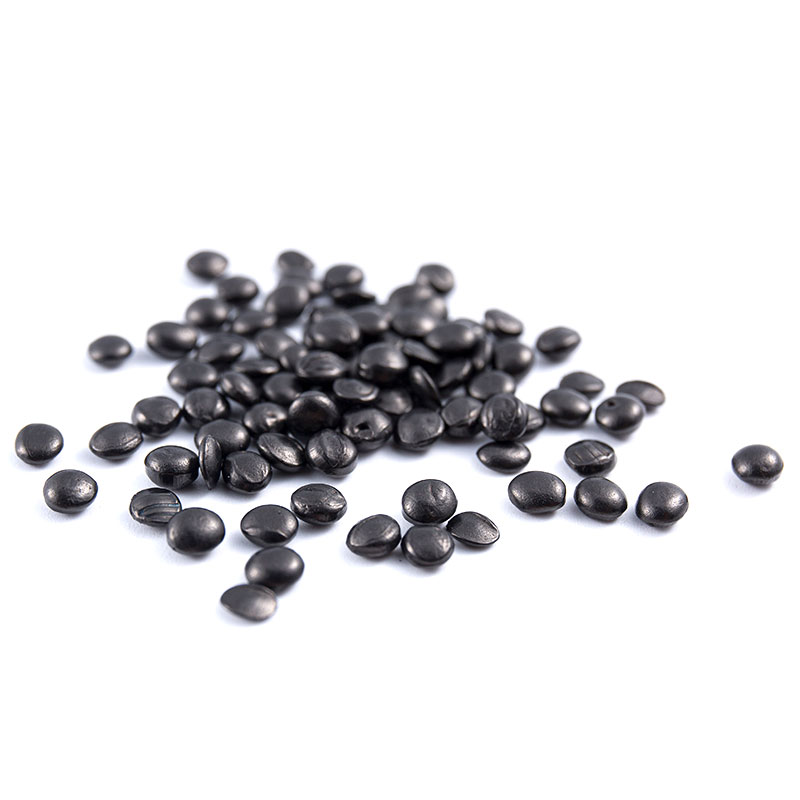
High temperature resistant and high strength black masterbatch is a functional colorant designed specifically for engineering plastics. Made from polyethylene (PE) with carbon black added, the carbon black concentration is approximately 47% and the ash content is less than 1%. This product provides a uniform black coloration during plastic compounding and injection molding processes, while also imparting high strength and high-temperature resistance, ensuring stable and reliable performance in engineering plastic applications.
This high-temperature-resistant, high-strength black masterbatch is suitable for a wide range of applications, including engineering plastic compounding, injection molding, and other high-temperature processing. It is particularly well-suited for products subject to high operating temperatures and mechanical stresses. It is packaged in 25 kg bags and can be stored in either KP or PE bags. Store in a dry, cool environment, away from sunlight and rain, to ensure long-term stability. Proper use of this product can effectively improve the color uniformity, surface gloss, and overall durability of finished products.
Parameter

# BLACK MASTERBATCH E148J

E148J is made of PE. Carbon black concentration is around 47%.
Applicable for For Engineering Plastic compounding, Injection, Blue tone, High gloss, High tint Strength, High temperature resistance.

Ingredients Carbon Black: 47%±2
ASH: <1%
Usage Mixed with materials.
Dosage suggested 1-3%.
Technical Index Density: <2.0g/cm3
Melting Speed:>10g/10min(21.6kg/190℃)
Moisture:<0.50%
Package 25kg per bag, KP bag or PE bag
Storage Place in dry and cool warehouse, avoid sun shine and raining.
Note The above index is based on the testing result for reference only, not as the specific index.
Home Appliance Parts — Engineering Grade

High Temperature Resistant & High Strength Black Masterbatch — Grade E148J

47%
Carbon Black — Highest in Range
<1%
Ash — No Filler Added
Blue
Tone — High-Spec Cool Black

E148J stands at the top of E-LUCK's carbon black loading range. At 47% ± 2%, it delivers the highest color strength per kilogram of masterbatch in the blown film and injection series — a specification that is not about raw pigment cost optimization, but about formulating for the demands of high-temperature engineering plastic processing where standard masterbatches fail. The complete absence of mineral filler (ash <1%) removes the thermal stress concentration points that cause surface defects at barrel temperatures above 240°C, and the PE carrier is selected for thermal stability that allows clean incorporation into engineering resins processed at the upper end of the injection temperature spectrum.

The blue undertone — a color-science characteristic of the high-structure furnace-grade CB used in E148J — is preserved at the processing temperatures required by engineering resins like PA, PC, and high-flow PP compounds. Many standard masterbatches undergo subtle color shift (toward warm tones) at temperatures above 230°C as lower-structure carbon black particles partially oxidize or agglomerate. E148J's high-structure CB is thermally resistant to this shift, delivering consistent cool-black appearance whether the part is processed at 200°C or 280°C.


Technical Data Sheet

E148J — Full Parameter Reference

Parameter Specification Method / Notes
Grade Code E148J Engineering Plastic — High Temp / High Strength Series
Carrier Resin Polyethylene (PE) High-thermal-stability PE; no filler added
Carbon Black Content 47% ± 2% Highest CB concentration in E-LUCK injection/compounding range
Filler None Clean formulation — no CaCO₃ or mineral addition
Ash Content < 1% ISO 3451 — near-zero inorganic residue
Density < 2.0 g/cm³ ISO 1183
Melt Flow Rate > 10 g/10 min 190°C / 21.6 kg; ISO 1133
Moisture Content < 0.50% Critical at high processing temperatures — prevents gas marks
Color Tone Blue undertone (cool black)
Stable across processing temperature range 200–280°CKey PropertiesHigh gloss, high tint strength, high-temp resistance, high strengthValidated for engineering plastic compounding and injectionRecommended Dosage1% – 3%Lower end sufficient in engineering resins due to high CB concentrationCompatible ProcessesEngineering plastic compounding, injection molding, high-temp extrusionConfirm for specialty resins above 300°C processingPackaging25 kg / bag (KP or PE bag)Dry warehouse storage; avoid UV exposure

Concentration Analysis

Why 47% Carbon Black — and What It Enables

47%
CB Concentration in E148J
Highest loading in E-LUCK's engineering plastic masterbatch range

At 47% carbon black with zero mineral filler, E148J introduces the maximum possible amount of active colorant and UV/thermal absorber per kilogram of masterbatch, with no dilution by inert mineral content. The practical consequences span three dimensions.

Color economy: at 1% letdown, E148J puts 0.47% actual carbon black into the engineering resin — the same optical result that a 20%-grade masterbatch would require 2.35% dosage to achieve. For compounders and injection molders processing expensive engineering resins (PA66, PC, PBT), the reduction in masterbatch addition rate directly reduces the carrier-resin contamination in the finished compound, preserving the base resin's mechanical properties.

High-temperature color stability: the high CB volume fraction in E148J means that even at processing temperatures above 250°C — where some carbon black oxidation occurs — the residual active CB fraction remains sufficient for full color depth. Grades at lower concentration are more sensitive to high-temperature color fade because the oxidative loss represents a higher percentage of the total CB present.


Temperature Resistance

E148J Across the Engineering Resin Processing Temperature Spectrum

The high-temperature resistance designation refers to two distinct behaviors: processing stability (the masterbatch integrates cleanly without color shift or decomposition at elevated barrel temperatures) and service stability (the finished part retains color and structural properties under sustained elevated use temperatures). Both are relevant to home appliance applications.

180–220°C
PP / PE Range

Standard processing window for injection-grade PP and HDPE. E148J performs identically to other PE-carrier masterbatches in this range — clean melt incorporation, no decomposition, consistent CB dispersion. In this zone, E148J's advantage is its high concentration, not its temperature resistance.

220–260°C
ABS / PBT / PA6

Engineering resin zone where standard filled masterbatches begin to show color instability. CaCO₃ filler at these temperatures can undergo localized decomposition at particle interfaces, generating CO₂ that produces micro-voids visible as surface dimpling. E148J's ash-free formulation eliminates this mechanism entirely. The blue undertone remains stable up to 260°C with no warm-shift observed in standard production conditions.

260–280°C
PA66 / PC / High-Temp PP

Demanding engineering resin window. E148J has been validated for use in PA66 (nylon 66) compounding and PC injection at barrel temperatures in this range. The PE carrier undergoes thermal degradation above 300°C, so for resins processed above 290°C, the E-LUCK technical team should be consulted for a higher-temperature carrier option. Within the 260–280°C window, performance is consistent with lower-temperature results — no color shift, no decomposition products, clean surface finish.

40–120°C
Service Temperature

Finished part service stability: home appliance motor housings, heating element covers, and internal structural parts are routinely exposed to service temperatures of 60–120°C in continuous operation. At these temperatures, the primary degradation mechanism in black engineering plastic parts is UV-enhanced thermal oxidation of the polymer chain. The high CB loading contributed by E148J at 1–3% letdown provides sufficient UV/thermal absorber density to retard this degradation pathway for the expected service life of most home appliance components (5–10 years under typical duty cycles).


Target Applications

Where E148J Is Specified — High-Demand Engineering Plastic Parts

Home Appliance Internal Components

Motor housings, gearboxes, pump bodies, impeller housings, and thermal management components in washing machines, dishwashers, air conditioners, and refrigerators. These parts are manufactured from PA6, PA66, or reinforced PP compounds processed at 220–260°C, with service temperatures reaching 80–120°C near motor and heating elements.

E148J at 1.5% letdown provides full black coloring with UV/thermal stabilization sufficient for the part lifetime, and the filler-free formulation preserves the base resin's impact strength and heat deflection temperature without the degradation associated with CaCO₃ addition to PA or reinforced PP compounds.

Engineering Plastic Compounding Lines

Pre-compounding into PA, PC, ABS, or PBT engineering pellets before final injection. In compounding applications, the masterbatch is processed at the base resin's full compounding temperature — often 240–270°C — and must maintain color stability and dispersion uniformity through repeated shear cycles in the twin-screw.

At 47% CB concentration, the introduction rate of PE carrier into the engineering compound is minimized: at 1% letdown, only 0.53% of the compound weight is PE carrier, well below the threshold for detectable carrier-phase contamination in most engineering resin mechanical property tests.

High-Strength Structural Injection Parts

Structural brackets, bearing housings, connector bodies, and load-bearing enclosures where the part must maintain dimensional stability under both mechanical stress and elevated temperature. For these applications, E148J's clean (filler-free) formulation is preferable to CaCO₃-filled alternatives, as mineral introduction can reduce notch impact toughness in PA and PC compounds.

The "high strength" aspect of E148J's designation reflects its compatibility with reinforced engineering resins — glass-fiber filled PA, mineral-filled PC — where the masterbatch must integrate without creating weak interfaces in the reinforced polymer matrix.

High-Gloss Consumer Electronics Parts

Premium electronics casings in PC, ABS/PC blend, or PMMA-modified ABS requiring jet-black with blue-cool tone, processed at 240–270°C. The high CB concentration means E148J can achieve color depth at 1% dosage that reduces carrier-phase interference with the polished gloss surface that PC and ABS/PC blends can produce.

The thermal color stability of E148J is particularly relevant in PC processing, where high barrel temperatures (250–270°C) combined with standard carbon black can produce localized warm-tone shifts at gate or weld line regions that appear as color inconsistencies in final inspection. E148J's high-structure CB is resistant to this mechanism.


Grade Comparison

E148J vs Lower-Concentration Grades in Engineering Resin Applications

Criterion E148J (47% CB, ash <1%) Standard 40% Grade (e.g. PP103, ash <12%) Standard 20% Filled Grade (ash up to 50%)
CB Introduction at 2% Letdown 0.94% in finished compound 0.80% 0.40% — requires 4%+ to match
Carrier Contamination at 2% 1.06% PE carrier (minimum) 1.20% PE carrier 1.60%+ PE carrier
Filler in Finished Part at 2% <0.02% (negligible) 0.24% from 12% ash grade 1.0%+ from 50% ash grade
Color Stability Above 250°C Confirmed stable, no warm shift Generally stable Risk of gas marks from CaCO₃ decomposition
Blue Tone Retention Maintained 200–280°C Moderate Variable
Impact on Base Resin Mechanics Minimal — low carrier/filler volume Low to moderate Potentially significant for PA/PC at high filler levels

Technical FAQ

Engineering Resin Processors Ask About E148J

Can E148J be used in polyamide (PA66) injection at 270°C barrel temperature?+

E148J has been tested in PA66 compounding and injection at barrel temperatures up to 270°C. Within this window, the PE carrier is thermally stable and the carbon black dispersion is maintained without decomposition products or color shift. The key precaution for PA66 processing is moisture: PA66 is highly hygroscopic and must be pre-dried before processing; any moisture above 0.1% in the PA66 resin (not in the masterbatch) will produce gas marks independent of the masterbatch used. E148J's own moisture content (<0.5%) is not the limiting factor in PA66 — the base resin drying protocol is. Always pre-dry PA66 to <0.1% moisture before blending with E148J.

At 47% CB concentration, does E148J require any special handling to prevent carbon black dust or contamination?+

No, and this is a key advantage of the pellet-form masterbatch format. E148J is supplied as solid compounded pellets — all carbon black is encapsulated within the PE carrier matrix and does not release as dust under normal handling conditions. The pellet form is the standard safe alternative to direct carbon black powder handling, which presents documented inhalation risks. Standard PPE (gloves, dust mask as precaution when opening bags) is sufficient. The hermetically sealed 25 kg bag format further prevents any carbon black exposure during storage and transport. Handle pellets using standard resin handling equipment — no specialized containment is required.

Is E148J suitable for polycarbonate (PC) processing at 260–280°C?+

E148J is compatible with PC injection at barrel temperatures up to approximately 280°C with standard PC processing conditions (pre-dried PC at <0.02% moisture, barrel purged between runs). The PE carrier in E148J melts fully at PC processing temperatures and is distributed as a minor dispersed phase within the PC matrix — at 1% letdown, only 0.53% of the shot is PE carrier, which is generally below the threshold for visible phase separation or mechanical property reduction in standard grades of PC. For optical-quality PC applications requiring full transparency (which is incompatible with black masterbatch regardless), or for PC compounds with very tight mechanical specifications, a PC-carrier masterbatch grade from E-LUCK's specialty carrier series may be more appropriate. Contact the technical team with your PC resin grade and application requirements.


Engineering Resin Applications — Get Technical Confirmation Before Ordering
Submit your base resin grade, barrel temperature profile, and part specification. E-LUCK's technical team will confirm E148J compatibility and recommend trial conditions.
About Us
E-LUCK .
E-LUCK .

As China High Temperature Resistant and High Strength Black Masterbatch Factory and China High Temperature Resistant and High Strength Black Masterbatch Suppliers, E-LUCK is a professional manufacturer and solution provider specializing in black masterbatch for industrial applications. Since our founding, we have remained committed to the core values of precision, consistency, and material intelligence, integrating advanced dispersion technology with rigorous quality systems to meet the increasingly complex demands of modern polymer processing. From pipes and fittings to automotive parts, from consumer electronics to packaging films, our black masterbatches play a quiet yet critical role in enhancing product appearance, performance, and lifecycle for a wide range of downstream industries.

News

