

General Low Carbon Black Masterbatch Wholesale

Home / Products / Pipe Grade Black Masterbatch / Sewer Pipe Black Masterbatch / General Low Carbon Black Masterbatch

General Low Carbon Black Masterbatch

General Low Carbon Black Masterbatch

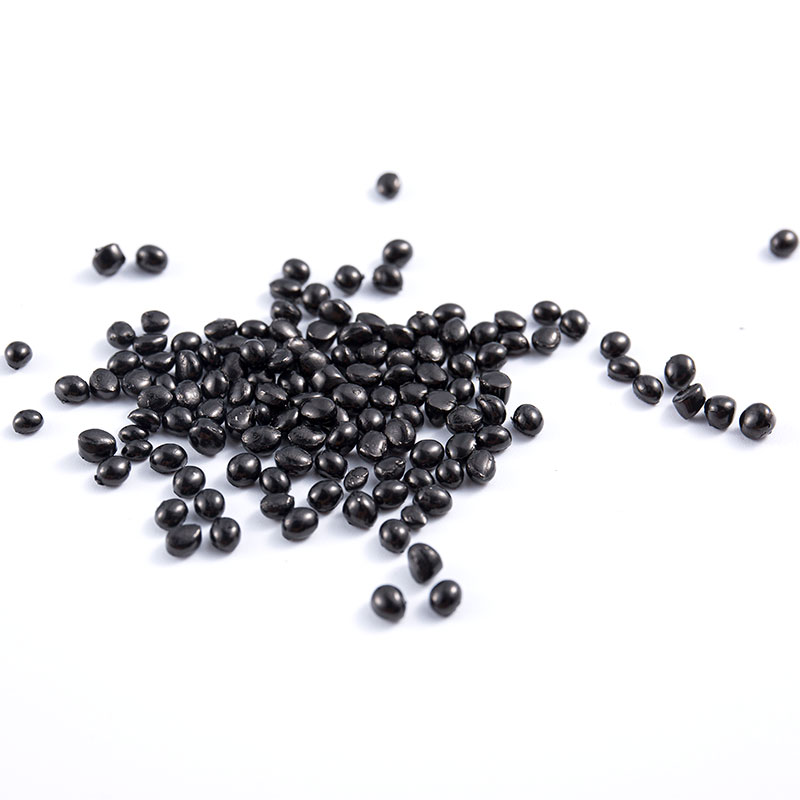
508C general low carbon black masterbatch is made from polyethylene (PE) with carbon black and calcium carbonate fillers, resulting in a carbon black content of approximately 13%. Suitable for a variety of plastic processing techniques, including blown film, pipe extrusion, and injection molding, this masterbatch achieves uniform coloration without significantly altering the polymer's mechanical properties. Its formulation balances color performance with material performance, providing a stable and reliable solution for a wide range of industrial applications.
In practical applications, 508C masterbatch not only provides a uniform black appearance but also enhances the durability of finished products. Its deep color effectively conceals surface stains, reducing maintenance and cleaning frequency in outdoor or industrial environments. For pipes, films, and injection molded products, this masterbatch maintains appearance while extending product life from UV rays, chemical corrosion, and mechanical impact, extending the product's overall lifespan.

Parameter

# BLACK MASTERBATCH 508C

508C is made of PE, carbon black with calcium carbonate filler. Carbon black concentration is around 13%. Applicable for blowing film, pipe extrusion, injection.

Ingredients Carbon Black: 13%±2
ASH: <69%
Usage Mixed with materials.
Dosage suggested 1-3%.
Technical Index Density: <2.0g/cm3
Melting Speed:>1g/10min(21.6kg/190℃)
Moisture:<0.50%
Package 25kg per bag, KP bag or PE bag
Storage Place in dry and cool warehouse, avoid sun shine and raining.
Note The above index is based on the testing result for reference only, not as the specific index.
Sewer Pipe Series — General Grade

General Low Carbon Black Masterbatch — Grade 508C

13%
Carbon Black
<69%
Ash Content
>1
MFR g/10min
1–3%
Dosage

Grade 508C is the general-purpose, cost-optimized masterbatch in E-LUCK's sewer pipe range. Its formulation is built on the fundamental economics of drainage pipe production: sewer pipe operates at zero internal pressure and has no potable water contact requirement, which means the strict mechanical purity demands of water supply pipe masterbatches — filler-free formulations, ash below 1%, maximum CB concentration — simply don't apply. 508C takes advantage of this by incorporating a significant CaCO₃ filler loading (ash <69%) alongside 13% carbon black, producing a masterbatch that delivers the coloring and basic UV protection that drainage pipe needs at a material cost significantly below clean-grade alternatives.

The high mineral content serves multiple functions simultaneously: it reduces the polymer content per kilogram of masterbatch (replacing a portion of the more expensive PE carrier with inexpensive calcium carbonate), contributes stiffness to the finished pipe wall, and at the addition rates typical for sewer pipe compounds, introduces enough inorganic mass to modestly improve pipe wall dimensional stability under soil compaction loads.

The low carbon black concentration (13%) reflects the sewer pipe application environment: drainage pipes are typically buried and shielded from direct UV; the primary coloring function is identification (black drainage pipe is a standard industrial visual convention) rather than UV protection. At 1–3% dosage, 508C provides uniform black coloring throughout the pipe wall without requiring the optical density margins needed for exposed outdoor-service applications.

The MFR ceiling of >1 g/10min (at 21.6 kg) is deliberately set at the lower bound of the processable range — a characteristic of the high mineral loading, which increases melt viscosity. Pipe extrusion lines running HDPE for drainage pipe at 180–220°C barrel temperature process 508C without issue, but should note that the higher-viscosity masterbatch requires adequate mixing time in the barrel for complete dispersion into the HDPE melt.


Technical Data Sheet

508C — Complete Parameter Reference

Parameter Specification Method / Notes
Grade Code 508C General Low Carbon Black — Sewer Pipe Series
Carrier Resin Polyethylene (PE) + CaCO₃ filler High mineral loading; filler contributes stiffness and reduces polymer cost
Carbon Black Content 13% ± 2% General sewer pipe coloring level; adequate for non-exposed drainage applications
Filler (CaCO₃) Present — ash <69% High mineral loading; primary cost-reduction component
Ash Content < 69% ISO 3451 — highest filler ratio in E-LUCK's pipe grade range
Density < 2.0 g/cm³ ISO 1183
Melt Flow Rate > 1 g/10 min 190°C / 21.6 kg — lower MFR due to high mineral loading; confirm mixing adequacy on line
Moisture Content < 0.50% CaCO₃ filler is hygroscopic; pre-dry if stored in high-humidity conditions
Recommended Dosage 1% – 3% At 2%: 0.26% CB introduced to pipe wall — coloring function primary
Compatible Processes Blown film, pipe extrusion, injection molding Sewer pipe extrusion is the primary validated application
Packaging 25 kg / bag (KP or PE bag) Store sealed; avoid moisture exposure (CaCO₃ is hygroscopic)

Formulation Composition

What 508C Is Made Of — and Why the High Filler Ratio Makes Economic Sense

The composition of 508C reflects the cost structure of sewer pipe production. The proportional bar below illustrates the approximate constituent distribution in 508C at mid-specification values. The high CaCO₃ fraction is not a quality compromise — it is the primary economic mechanism of this grade.

CB 13%
CaCO₃ filler ~56%
PE carrier ~18%
Carbon Black
13% ± 2% — UV absorber and colorant. Low concentration reflects sewer pipe's limited UV exposure requirement.
Calcium Carbonate Filler
>56% — primary mass component. Replaces expensive polymer at low cost per kg, contributes stiffness to pipe wall.
PE Carrier
~18% — minimum carrier content to achieve pellet cohesion and processable melt behavior. Reduced by high filler loading.

Bar proportions are approximate based on mid-range specification values. Actual formulation percentages vary within published specification tolerances.


Application Context

Why Sewer Pipe Allows — and Benefits From — High-Filler Masterbatch Formulations

What Sewer Pipe Does Not Require

Non-pressure drainage pipe (sewer and storm water) does not need to pass long-term hydrostatic pressure testing. It does not carry potable water, so water contact safety testing and leachable migration limits do not apply to the black masterbatch component. It is typically buried and not exposed to sustained UV after installation. These absent requirements are what allow 508C's high CaCO₃ loading to be an asset rather than a liability — the properties that CaCO₃ compromises (slow crack growth under sustained pressure, water contact safety, UV protection density) are simply not on the sewer pipe specification.

The relevant sewer pipe performance requirements are ring stiffness (resistance to crushing under soil load), joint leak-tightness, chemical resistance to sewage and ground contamination, and dimensional consistency. None of these are negatively affected by the filler loading in 508C at the dosage rates used in pipe production.

What 508C Contributes to the Pipe

At 2% dosage into HDPE or MDPE pipe compound, 508C introduces approximately 0.26% CB and approximately 1.1% CaCO₃ into the pipe wall. The CB provides black coloring and basic UV protection for above-ground storage. The CaCO₃ contributes a minor increase in ring stiffness through its nucleating effect on HDPE crystallization — a secondary benefit at the concentrations involved, but relevant for large-diameter drainage pipe where ring stiffness to weight ratio is a procurement consideration.

The black coloring is the primary function: black is the industry-standard identification color for sewer and drainage pipe in most markets, providing visual distinction from water supply (typically blue), gas (yellow), and electrical (red/orange) pipe systems. Consistent black across the pipe outer surface and through the wall cross-section is the primary quality requirement for the masterbatch.


Economic Analysis

508C vs Clean-Grade Masterbatch — Cost per Tonne of Sewer Pipe

The following comparison illustrates the economic principle behind selecting 508C over a higher-purity grade for sewer pipe. Actual figures depend on current market pricing; the ratios are representative of typical market conditions.

Metric 508C (13% CB, <69% ash) Clean Grade (40% CB, <1% ash)
CB concentration 13% 40%
Dosage for equivalent black coloring 2–3% 1–1.5% (less required per tonne)
Masterbatch cost relative basis Lower per kg (mineral filler dominant) Higher per kg (CB + clean PE dominant)
Masterbatch mass per tonne of pipe 20–30 kg at 2–3% dosage 10–15 kg at 1–1.5% dosage
Filler introduction to pipe wall ~1.1% CaCO₃ at 2% dosage None — not applicable
Relevant for sewer pipe specification Yes — all sewer pipe properties met Over-specified — paying for purity not needed
Relevant for water supply pipe Not recommended — filler in potable water system Yes — filler-free, pressure pipe appropriate

Applications

Validated Application Contexts for Grade 508C

HDPE / MDPE Sewer Pipe Extrusion

SN4 and SN8 ring stiffness class drainage pipe for building drainage, storm water, and municipal sewer networks. 508C at 2% dosage provides uniform black throughout wall cross-section and meets the black pipe identification standard without requiring specification-grade masterbatch. Suitable for pipe diameters from 110 mm to 1200 mm at standard HDPE pipe extrusion line temperatures (180–220°C).

Corrugated Drainage Pipe

Double-wall corrugated HDPE drainage pipe (inner smooth bore, outer corrugated profile) for sub-drain, agricultural drainage, and highway drainage applications. The high filler loading in 508C contributes modest additional stiffness to the pipe wall — a minor benefit in corrugated pipe where ring stiffness is primarily determined by the corrugation geometry rather than wall compound properties. Consistent black color across both inner and outer walls at 2–3% dosage.

Inspection Chamber & Fitting Injection

Injection molded inspection chambers, manhole rings, and pipe fitting components in black HDPE or PP for drainage infrastructure. At 2% dosage, 508C provides full coverage coloring in the heavy wall sections typical of inspection chambers (wall thickness 8–20 mm) without the precision requirements of thin-wall injection molding. The lower MFR (>1 g/10min) is adequate for the large-gate, low-pressure injection tooling typical of chamber components.

General Industrial Blown Film

Non-food-contact industrial black film — construction site protective sheeting, damp-proof membrane, underground cable marker tape — where maximum cost efficiency is the primary specification and UV protection beyond 12 months is not required. At 3% dosage in LDPE or LLDPE blown film, 508C produces opaque black film for ground protection and construction applications at the lowest material cost per square meter of film.


FAQ

Technical Questions on Grade 508C

Does the high CaCO₃ content in 508C affect the ring stiffness of the finished sewer pipe?+

At 2–3% letdown of 508C into a HDPE sewer pipe compound, the CaCO₃ contribution to the finished pipe wall is approximately 0.8–1.4% by weight. At these concentrations, the direct mechanical effect on ring stiffness is marginal — measurable in laboratory testing but below the threshold for specification class change in standard EN 13476 ring stiffness testing. CaCO₃ acts as a nucleating agent for HDPE crystallization, which at higher direct filler loading levels produces meaningful stiffness increases; at the diluted level from a 2–3% masterbatch addition, the nucleating effect is present but modest. The practical conclusion: 508C does not compromise sewer pipe ring stiffness, and may provide a small positive contribution, but should not be selected specifically for ring stiffness improvement — select it for coloring and cost.

Why is the MFR of 508C only >1 g/10min when other grades specify >10 g/10min?+

The lower MFR floor of 508C (>1 g/10min versus >10 g/10min for cleaner grades) reflects the viscosity-increasing effect of the high CaCO₃ loading. Mineral fillers significantly increase the apparent viscosity of a polymer melt — at 50–60% filler by weight, the masterbatch melt viscosity is substantially higher than an unfilled PE at equivalent temperature. This reduces the MFR measured under standard test conditions (21.6 kg, 190°C). The >1 g/10min specification sets the lower processability bound — below 1 g/10min, consistent hopper feeding and adequate melt mixing in the pipe extruder barrel become difficult. In practice, 508C typically measures in the 2–8 g/10min range; the specification ceiling of >1 sets the minimum. For pipe extrusion processors, the key practical implication is to ensure adequate barrel length and mixing screw geometry to fully disperse 508C into the HDPE compound before the die. Short L/D screws (below 24:1) may give marginally less uniform color distribution at 3% dosage.


High-Volume Sewer Pipe — Specify 508C for Cost Efficiency
Share your pipe diameter, wall class, and monthly volume. E-LUCK will provide pricing and confirm the dosage and mixing parameters for your extrusion line.
About Us
E-LUCK .
E-LUCK .

As China General Low Carbon Black Masterbatch Factory and China General Low Carbon Black Masterbatch Suppliers, E-LUCK is a professional manufacturer and solution provider specializing in black masterbatch for industrial applications. Since our founding, we have remained committed to the core values of precision, consistency, and material intelligence, integrating advanced dispersion technology with rigorous quality systems to meet the increasingly complex demands of modern polymer processing. From pipes and fittings to automotive parts, from consumer electronics to packaging films, our black masterbatches play a quiet yet critical role in enhancing product appearance, performance, and lifecycle for a wide range of downstream industries.

News

