

 Español

Why the Right Black Masterbatch Supplier Matters
If you are evaluating black masterbatch suppliers for a new production line or a new product, you probably already have a price range in mind. But the true cost of a supplier is measured on your factory floor, not on a quotation sheet. A masterbatch that looks fine in the bag can still produce black specks, flow lines, or inconsistent color after a few hours on a blown film line. This usually happens because the carbon black particles are not fully de-agglomerated during compounding, or because the carrier resin is not matched to your base polymer.
These defects do more than hurt appearance. In film extrusion, poor dispersion can reduce tear strength and make the film fail in the field. In pipe extrusion, a low-quality masterbatch can lead to weak spots and premature cracking. In food-contact packaging, the wrong raw materials can raise migration levels beyond regulatory limits. In automotive interiors, high-volatile grades can fog windshields and trigger unpleasant odors. That is why choosing a black masterbatch supplier is a risk-management decision, not just a purchase order.
Understanding how carbon black works helps. Carbon black is composed of extremely fine particles that naturally stick together. A skilled masterbatch manufacturer uses high-shear mixing, appropriate wetting agents, and the correct carrier resin to break apart those agglomerates and keep them separated during processing. When this is done well, the masterbatch delivers consistent blackness, high hiding power, and stable mechanical performance across production runs.
Key Criteria for Evaluating Black Masterbatch Suppliers
To move from a long list of potential suppliers to a reliable shortlist, use a systematic evaluation framework. In our experience serving plastic manufacturers, five criteria matter most: product coverage, carrier compatibility, dispersion and consistency, customization capability, and compliance support. A useful first step is to explore our complete black masterbatch product range to see the difference between a full-line manufacturer and a narrow product reseller.
Product Range and Process Compatibility
Not all black masterbatches are interchangeable across processing methods. A grade designed for blown film may have a different melt flow rate, additive package, and pigment loading than one made for injection molding or pipe extrusion. If your production uses several processes, you need a supplier whose product matrix covers them all. This is especially important for buyers who run both film lines and injection molding machines, because they cannot afford to qualify a different supplier for every process.
Look for a product portfolio organized by application. Blown film grades should include options for agricultural film, courier bags, shopping bags, and stretch film. Injection and extrusion grades should cover appliance housings, toys, and sheet. Pipe and profile grades should be available for both water supply and sewer pipe. For example, pipe-grade black masterbatch products are formulated specifically for the high melt strength and external weathering resistance that extruded pipes require.
When you review a supplier's range, ask whether each grade is tested under the corresponding process conditions. A supplier that only offers a generic universal black masterbatch may be pushing you toward a compromise you do not need.
Carrier Resin Compatibility and Specialty Capabilities
The carrier resin is what carries the carbon black into your base polymer. If the carrier is not compatible with the base polymer, you will see poor dispersion, poor mechanical properties, or surface defects. Many low-cost suppliers only work with polyethylene or polypropylene carriers, which limits their usefulness for engineering plastics.
A professional black masterbatch manufacturer should offer carriers such as AS, PA, PC, PPS, PET, PBT, TPU, PCTG, and POE. Each carrier requires different compounding conditions and a different formulation approach. For example, PC carrier masterbatches need careful drying and temperature control to prevent degradation, while PA grades must address moisture sensitivity and wear resistance. If you process specialty resins, ask the supplier directly: "Which carriers do you formulate in-house?" A supplier with specialty carrier black masterbatch options can match your material system without downgrading your requirements.
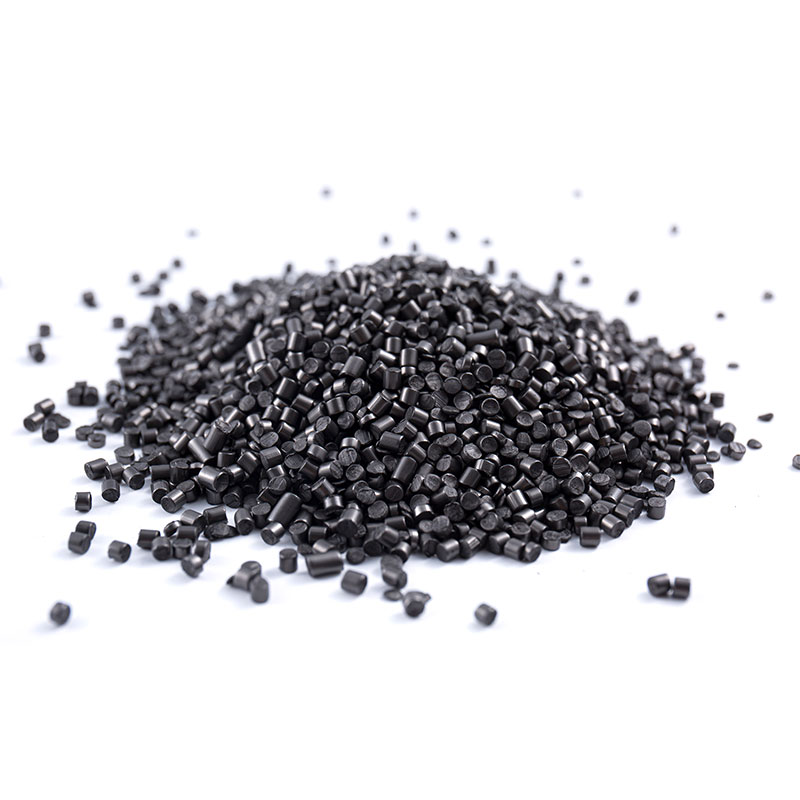 Specialty Black MasterbatchOur specialty black ...View Product →
This dimension is also a useful test of whether you are dealing with a manufacturer or a trader. Traders typically resell a limited set of generic products and cannot adapt the carrier to your polymer. A real manufacturer will ask about your resin type, processing temperature, and final part requirements before recommending a grade.
Consistency, Dispersion, and Functional Performance
Dispersion is the single most important quality attribute of a black masterbatch. You can evaluate it directly by running a small trial on your own line and inspecting the output for black specks, streaks, or color mottling. Strong dispersion also means that the carbon black is evenly distributed, so the final part has consistent blackness and hiding power.
Concentration matters too. A high-concentration masterbatch allows you to use less masterbatch in the final compound, which can lower costs if the letdown ratio is optimized. But concentration is only useful if the masterbatch remains workable during processing. An over-concentrated pellet may not melt and mix properly, creating a new set of defects. Also examine heat stability, weather resistance, and low volatile content. For outdoor products, you need a grade that resists UV degradation. For automotive interior parts, low-VOC performance is crucial. Always request a technical data sheet that specifies these properties, and test samples before scaling up.
Also consider batch-to-batch consistency. A supplier that cannot maintain stable quality across production runs will cause re-qualification costs and unexpected downtime. Ask for a history of quality control data or, at minimum, run two or more production trials with separate batches.
Customization and Technical Support
Customization is not a luxury; it is a necessary service for many plastic processors. Your product may require a specific carbon black loading for a particular color target, or a functional package that includes UV stabilizers, antioxidants, antistatic agents, or scratch-resistance modifiers. If a supplier cannot adjust its standard formulations, you will be forced to accept a compromise that may not fully satisfy your customers.
A reliable supplier should welcome a conversation about your application, ask about the end-use environment, and propose formulation changes. A dedicated custom black masterbatch manufacturing service is a sign that the manufacturer treats customization as a core capability rather than a one-off request. Ask about development lead times, minimum order quantities for custom products, and whether they share a formal product specification after approval.
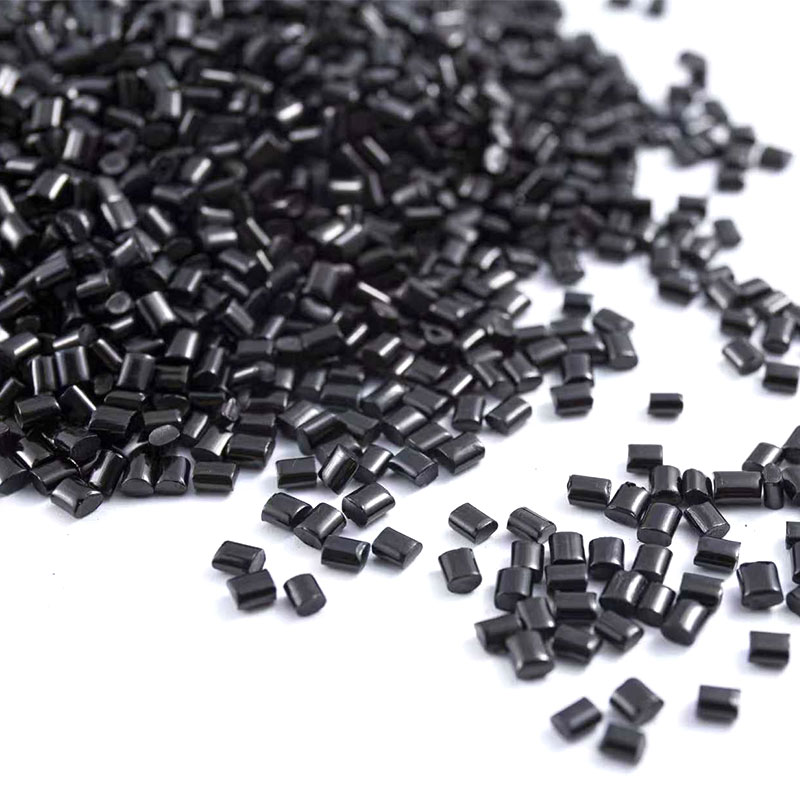 Customized Black MasterbatchOur customized black...View Product →
Technical support also matters beyond customization. Will the supplier help you troubleshoot if a masterbatch behaves differently on your line? Can they recommend an alternative carrier if your base resin changes? The answers will tell you whether you are building a long-term partnership or just a transactional relationship.
Compliance, Safety, and Sustainability
Compliance requirements depend on your end market. At a minimum, every black masterbatch supplier should be able to demonstrate that their products meet basic material safety standards. For food-contact packaging, you need grades with low migration that comply with relevant regulations. For automotive interiors, low-VOC and low-fogging performance is usually mandatory. For outdoor products, UV resistance and weather stability are functional requirements, not optional extras.
When evaluating a supplier, ask which compliance grades they offer. For example, food-contact grade black masterbatches are specifically designed for food packaging, tableware, and transport boxes, with raw materials selected to minimize migration risk. Similarly, automotive-grade black masterbatch series are tailored for interior and exterior parts that face strict volatile limits and weather exposure. A supplier that has structured its product line to meet these requirements is far more credible than one that claims "all grades are compliant" without supporting evidence.
 Food Contact Black MasterbatchOur food contact bla...View Product →
Sustainability is increasingly relevant as buyers demand recyclable or lower-impact products. Ask about the use of food-grade pigments, halogen-free additives, or carrier-free options that reduce the total additive load. While not all sustainability claims are standardized, a professional supplier should be able to explain the environmental profile of its products.
Red Flags to Watch Out for When Vetting Suppliers
While a structured evaluation framework is useful, you also need to spot warning signs early. If a potential supplier shows any of the following behaviors, treat them as a serious caution:
- No clear product classification. A supplier that cannot explain how its product range is organized by application, process, or carrier resin is unlikely to have a disciplined manufacturing operation.
- Vague answers about carrier compatibility. If the sales representative avoids questions about base resins or suggests that "one product works for everything," the company may not understand the technical basics.
- No evidence of a production facility. A genuine manufacturer should be able to share information about its factory, production equipment, or quality control procedures. The absence of such information may indicate a trading company.
- Reluctance to customize. If a supplier immediately raises obstacles to custom formulations or quotes extremely high minimum quantities, it probably lacks the compounding flexibility you need.
- Unclear compliance documentation. For regulated applications, a credible supplier should provide test reports or at least explain the regulatory basis. A vague "yes, it's food grade" is not enough.
These red flags are not automatically disqualifying in every case, but they should prompt you to do more due diligence before moving forward.
Why Work with a Full-Range Black Masterbatch Manufacturer
There is a practical advantage to consolidating your black masterbatch purchases with one full-range supplier. When you buy from multiple vendors, each product has its own carrier system, additive package, and quality history, which increases the work of qualification, receiving inspection, and troubleshooting. A full-range manufacturer offers a single platform for different processes and applications, allowing you to reduce supplier complexity and improve product consistency.
For example, a manufacturer that produces black masterbatches for blown film, injection molding, pipes, sheets, and specialty engineering plastics can align its formulations under one technical framework. This means that a part made from injection molding and a film made from blown extrusion share the same dispersion principles and carbon black source, which makes cross-application consistency easier to manage. It also shortens the learning curve when you introduce a new product, because the supplier already understands your broader material portfolio.
In addition, a full-range supplier can offer more flexible logistics. You can consolidate orders, reduce freight costs, and maintain less complex inventory. The most important benefit, though, is single-point accountability. If a problem arises, you do not have to argue about whether the pigment, carrier, or processing is at fault; the full-range manufacturer has both the knowledge and the responsibility to help solve it. E-LUCK operates as this kind of black masterbatch manufacturer, with product lines covering agricultural film, packaging, pipe, automotive, and specialized engineering plastics.
How to Get Started with a New Black Masterbatch Supplier
Once you have identified a candidate that passes your evaluation, follow a disciplined qualification process to minimize risk. Here is a practical sequence that works well for most plastic processors:
- Document your requirements. Write down your base resin, processing method, target letdown ratio, and any special requirements such as food-contact compliance, UV resistance, or low-VOC output. The more specific you are, the more accurate the supplier's recommendation will be.
- Request recommended grades and TDS. Send the supplier a summary of your application and ask for a recommended product plus a technical data sheet. Review the listed properties before allowing a sample.
- Run a production trial. Use the sample on your actual production line, not just in a lab. Watch for black specks, streaks, gel spots, or changes in melt temperature and die pressure. Photograph the output for comparison across batches.
- Evaluate batch consistency. If possible, request samples from two different production lots and test them side by side. This reveals whether the supplier's quality control is reliable.
- Clarify customization and lead times. If you need a custom formulation, ask about development time, sample approval steps, and minimum order quantities. A transparent supplier will give you a realistic timeline.
- Verify compliance documents. For regulated markets, obtain the relevant test reports or certificates before you commit to a large order. Keep them in your file for future audits.
- Start with a small order. Place an initial order that is large enough to validate the product on multiple shifts but small enough to limit your exposure. Then scale up after the results are consistent.
This approach turns a potentially risky switch into a controlled, evidence-based decision. Remember that a new supplier relationship is meant to be long-term, so the time you invest in qualification now will pay off in fewer production surprises later.
Conclusion
Selecting black masterbatch suppliers is a strategic decision that affects your production stability, product quality, and customer satisfaction. By applying the five-criteria framework—product coverage, carrier compatibility, dispersion and consistency, customization capability, and compliance support—you can identify suppliers that are truly equipped to serve your business. A full-range manufacturer like E-LUCK demonstrates these capabilities through a structured product matrix, specialty carrier solutions, custom development services, and grades designed for food-contact and automotive applications.
Before you make a final choice, compare your shortlist against these criteria and run practical trials. A sample test and a technical discussion will reveal more than any website or promotional brochure. If you are ready to start the evaluation, begin by reviewing the product categories and asking the right technical questions. The right supplier will not only meet your specification; they will help you improve your process and avoid problems downstream.