

 Español

Picture a blown film line running the same resin day after day. Then a new batch of black masterbatch arrives, and within an hour the film shows dark streaks, pinholes, and inconsistent gloss. The base resin is identical, and the processing settings have not changed. The only variable is the masterbatch itself — specifically, how the manufacturer handled carbon black dispersion and carrier selection.
Those two factors give the choice of black masterbatch manufacturer enormous leverage over your finished product. The goal is not to pick the largest name in the industry; it is to find a supplier whose formulation depth, quality control, and customization capability actually match your application. This guide explains how to make that match consistently, starting with the criteria that matter most in a commercial purchasing decision.
What Is Black Masterbatch and Why Manufacturer Selection Matters
Black masterbatch is a concentrated blend of carbon black, a carrier resin, and selected additives, designed to be let down into a base polymer during molding or extrusion. It performs three functions at once: it provides uniform black color, it can enhance UV resistance, and it helps preserve mechanical properties in the final part. The manufacturer you choose determines how consistently those functions are delivered across every batch you buy.
The most critical quality factor — carbon black dispersion — is also the hardest to correct after purchase. Poor dispersion shows up as surface specks, reduced impact strength, or filter blocking during film extrusion. An incompatible carrier creates a different set of failures: delamination, warpage, weld-line marks, or a sharp drop in mechanical performance. These defects usually appear only when the material is in full production, exactly when switching suppliers becomes expensive and disruptive.
That is why supplier selection deserves the same rigor as material selection. Whether your application is packaging film, agricultural film, automotive interior parts, water pipes, or food-contact tableware, the evaluation should compare far more than price per kilogram.
Key Criteria for Evaluating Black Masterbatch Manufacturers
Before requesting quotes, define what your application actually demands. A blown film producer, an automotive tier supplier, and a pipe extruder have very different priorities. The five criteria below give you a structured way to compare black masterbatch manufacturers on an equal basis.
Production Capability and Consistency
Start with the basics: does the supplier own the factory, or is it a trading operation? An in-house production facility with twin-screw compounding lines and documented dispersion control provides a verifiable foundation for quality. Batch-to-batch consistency is the real differentiator in practice. Ask for certificates of analysis from multiple batches of the same grade and compare melt flow rate, carbon black content, and moisture levels. Stable data across batches keeps your processing window predictable; unstable data means the same color and performance problems will appear on your line.
A factory section on the manufacturer's website is a useful first signal. E-LUCK, for example, publishes a factory section documenting its in-house production, which is a reasonable baseline before you invest time in deeper technical exchanges. If such evidence is missing, request a video audit or a site visit during evaluation.
Product Range and Carrier Compatibility
A black masterbatch is only as good as the compatibility between its carrier resin and your base polymer. General-purpose grades based on polyethylene or polypropylene carriers work well for commodity applications. Engineering plastics such as PA, PC, PPS, and PET require dedicated carriers that withstand higher processing temperatures and will not cause delamination, warpage, or loss of strength. Using a universal grade in a specialty resin often leads to surface defects and rejected parts, and the cost of those rejects far exceeds any price saving on the masterbatch.
When you review a supplier, check whether the product line is organized by carrier type or only by application. A manufacturer that offers specialty carrier masterbatch solutions for resins such as AS, PC, PA, PS, PPA, PPS, PET, PBT, TPU, PCTG, and POE demonstrates the formulation depth needed for demanding applications. E-LUCK structures its specialty range around exactly these carriers, which lets you match the masterbatch to your resin system instead of forcing a generic grade into a job it was never designed for.
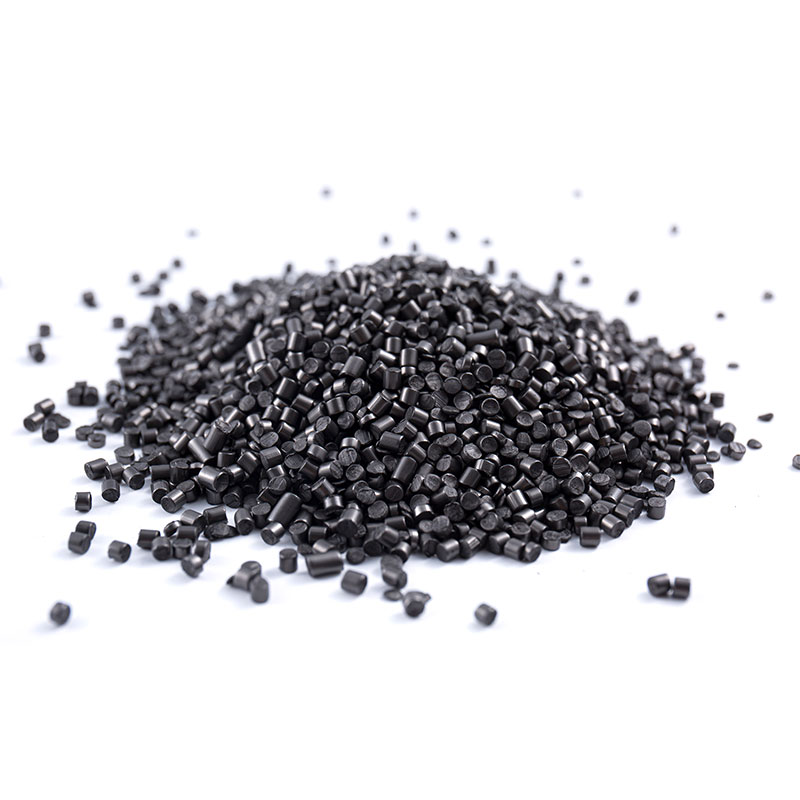 Specialty Black MasterbatchOur specialty black ...View Product →
Application-Specific Expertise
The same black colorant behaves differently depending on the end product. Blown film demands high dispersion and high hiding power so that streaks and pinholes stay absent even at thin gauges. Agricultural film requires weather resistance because long UV exposure degrades unprotected systems. Pipes need long-term environmental resistance and UV protection. Food-contact items require migration-compliant formulations. Automotive interior parts add two more constraints: low VOC emission and scratch resistance, since cabin temperatures accelerate volatile release and surfaces are touched constantly.
Assess whether the manufacturer has organized products around application areas, not just around color. A supplier that lists dedicated interior and exterior automotive formulations, such as E-LUCK's automotive-grade black masterbatch, is more likely to understand relevant test methods and processing constraints than one selling a generic grade for every use. Ask for application-specific guidance during the quotation phase; the quality of that guidance predicts the quality of ongoing support.
 Automotive Black MasterbatchSpecifically formula...View Product →
Custom Manufacturing Capability
Standard catalogue grades do not cover every project. You may need a specific blackness level, a blue-black or yellow-black tone, a higher let-down ratio, or a combined function such as color plus UV stabilization. The decisive question is whether the manufacturer can develop a tailored formula. Ask about the customization process, minimum order quantity, sample development timeline, and how easily the formula can be revised after trials. Some manufacturers treat custom work as an occasional accommodation; others treat it as a structured core service. E-LUCK maintains a separate category for custom black masterbatch services, which indicates that tailored development runs through defined processes with clear communication steps.
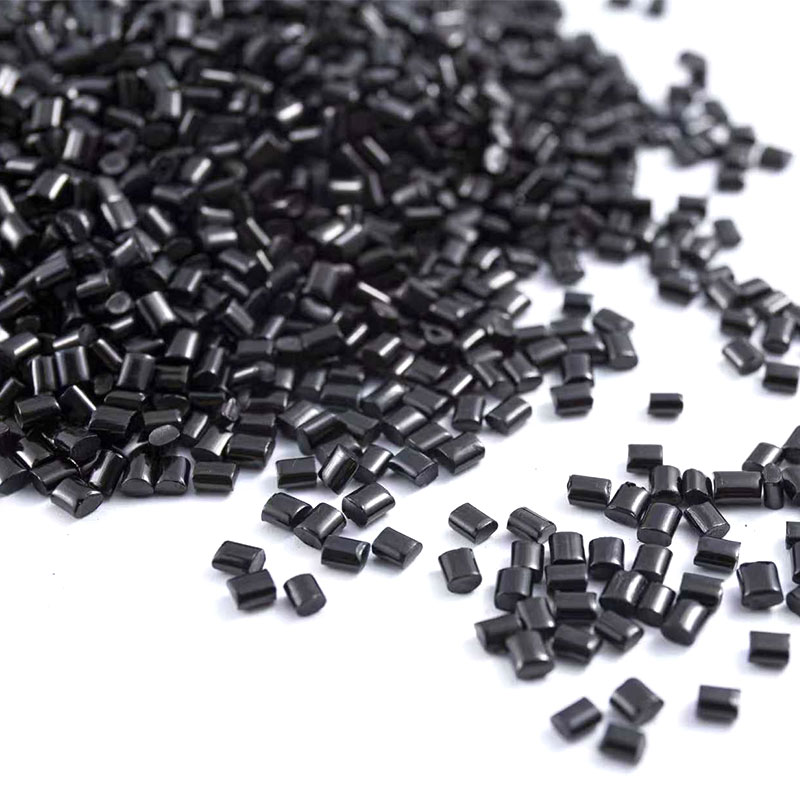 Customized Black MasterbatchOur customized black...View Product →
Certifications and Compliance
Certification requirements depend on target market and application. North American and European buyers commonly request RoHS and REACH documentation; food-contact applications require FDA-compliant grades or migration test reports; electrical and appliance parts may need UL recognition. Two cautions matter in practice. First, verify that certifications correspond to the actual grade you intend to order, not just to the company's management system. Second, request third-party test reports instead of accepting blanket statements of compliance. The documentation confirms that both the carbon black and the additive package meet the regulatory limits for your end use.
Types of Black Masterbatch Manufacturers: Who Are the Key Players
Black masterbatch manufacturers in the global market fall into three broad groups, and each group serves a different type of buying decision. Recognizing the structure helps you position your requirements before you start long supplier conversations.
Global Specialty Chemical Giants
Multinational chemical corporations with production sites and distribution networks on several continents anchor this group. They offer strong brand recognition, comprehensive documentation, and deep research pipelines. The trade-offs are equally clear: higher price levels, limited appetite for small custom orders, and slower response to non-standard requests. This type fits large multinational programs that require formal brand backing and global supply agreements.
Large-Scale Regional Producers
Large regional producers, many based in India and Southeast Asia, compete primarily on volume and price. Their catalogues emphasize high-consumption general-purpose grades for film, packaging, and injection molding. If your requirement is stable, high-volume, and covered by a standard grade, these producers offer efficient economics. Their product depth in specialty carriers and application-specific additives, however, is often narrower than that of dedicated custom manufacturers.
Specialized Custom Manufacturers in China
China's complete plastics processing chain has produced a dense network of specialized masterbatch factories, with notable clusters in Guangdong, Shandong, and Jiangsu. These manufacturers typically offer deeper product segmentation, faster customization, and a more competitive cost structure than global peers, while steadily expanding their international sales and export capabilities. E-LUCK fits this profile: its catalogue spans agricultural film, courier bags, appliance casings, automotive interior and exterior parts, water supply and sewer pipes, food-contact tableware, and specialty carriers such as AS, PC, PA, PPS, PET, PBT, TPU, PCTG, and POE. The company also operates English and Spanish versions of its website, which makes it directly accessible to overseas procurement teams. This combination of broad coverage and customization flexibility is the main reason specialized Chinese manufacturers deserve a place on any serious shortlist.
| Manufacturer type | Main strengths | Main trade-offs | Best fit for |
|---|---|---|---|
| Global specialty chemical giants | Brand recognition, global supply, deep R&D capabilities | Higher price, slower custom response | Large multinational programs requiring formal brand backing |
| Large-scale regional producers | High volume, competitive pricing, stable standard grades | Limited specialty carriers and application depth | High-consumption commodity applications |
| Specialized custom manufacturers in China | Deep product segmentation, flexible customization, cost efficiency | Requires careful supplier vetting and documentation review | Buyers needing full-range coverage, tailored grades, or application-specific support |
A Step-by-Step Checklist for Shortlisting and Vetting Suppliers
Shortlisting is only half the process; vetting converts a candidate list into a reliable supply source. The sequence below works well for processors in film, pipe, automotive, and consumer goods, and it keeps the evaluation focused on measurable evidence.
- Define your application and base resin, and write down the mandatory technical parameters: blackness level, hiding power, weather resistance, and any volatile or migration limits.
- Request the technical data sheet and safety data sheet for the target grade from each candidate, and verify the parameters against your requirements rather than against marketing claims.
- Run machine trials with samples. Inspect molded or extruded surfaces for carbon black agglomerates, and measure batch-to-batch color difference under identical processing conditions.
- Ask for third-party test reports for regulatory items such as food-contact migration or heavy metal content instead of accepting self-declared compliance.
- Evaluate the quality of technical communication. Precise answers to process-related questions are a reliable predictor of smooth collaboration after the order is placed.
- Confirm logistics and trade terms, including packaging specification, lead time, and responsibility for international freight and duties.
Conclusion
The final decision should rest on technical match, customization capability, compliance evidence, and cost — in that order. A brand name alone will not prevent dispersion defects, and the lowest quote cannot compensate for a carrier that is incompatible with your resin.
For buyers who need a broad product range, application-specific formulations, and the ability to develop custom grades, specialized custom manufacturers deserve a place on the shortlist. E-LUCK is one such supplier, with a product structure organized by both application and carrier type, an in-house factory, and dedicated custom manufacturing support. Rather than taking any description at face value, review its full range of black masterbatch products, request the relevant technical documents, and verify performance with your own machine trials.