

 Español

A packaging line running black film for agricultural mulch starts producing streaks halfway through a shift. The color thins out near the edges, tiny gels dot the surface, and the extruder die requires cleaning twice as often as usual. The base resin has not changed, the machine settings are identical, and the operators have followed every procedure. Then the black masterbatch is replaced with a batch from a different supplier, and the line returns to normal within an hour. This scenario repeats itself in plastics factories around the world, and it explains why plastic masterbatch deserves much closer attention than its low dosage level might suggest.
Plastic masterbatch is a highly concentrated blend of pigments and additives embedded in a carrier polymer. It is metered into the base resin during extrusion, injection molding, or blow molding, and it determines the final color, appearance, and in many cases the long-term performance of the product. For buyers of black masterbatch, the difference between an ordinary product and a well-formulated one appears directly on the production floor: fewer gels, stable color, lower filter pressure, and fewer rejected parts.
What Is Plastic Masterbatch and How Does It Work?
Plastic masterbatch is a solid pelletized additive system in which carbon black or other pigments are pre-dispersed at a high concentration, typically 20–50% by weight, inside a carrier resin. During processing, the masterbatch pellets are blended with the natural base polymer at a ratio called the let-down ratio or dosage rate. For black masterbatch, this ratio commonly ranges from 1–3% for general dark shades to 4–6% for deep black or high-opacity applications, and in some specialty cases it can reach 8% or more.
When the mixture enters the heated barrel, both the carrier resin and the base polymer melt. The molten carrier releases the carbon black agglomerates into the polymer melt, where screw shear forces break down any remaining clusters and distribute individual particles evenly. The carrier resin must therefore be compatible with the base polymer, otherwise the blend will separate, the color will be uneven, and mechanical properties can suffer.
Masterbatch technology was developed in the mid-20th century as an answer to the practical difficulties of using raw pigments in continuous extrusion processes. Early converters quickly found that pre-dispersing pigments in a carrier resin improved tint strength, reduced waste, and made color changes faster. Today, masterbatch is the preferred coloring solution for most plastic products, and black masterbatch in particular has become a category with very different quality levels hiding behind very similar prices.
Black masterbatch is the most widely used masterbatch category because carbon black performs two jobs at once. It acts as a pigment that hides the natural color of the polymer or recycled content, and it functions as a UV stabilizer that protects the product from sunlight degradation. In certain concentrations, it also affects electrical conductivity and heat absorption, which makes it relevant for applications ranging from greenhouse films to automotive interior parts.
Why Use Masterbatch Instead of Raw Carbon Black or Pigments?
A processor could theoretically add raw carbon black powder directly to the extruder. In practice, almost nobody does. The reasons are rooted in efficiency, safety, and final product quality.
- Dust-free handling. Carbon black is an extremely fine powder with particles in the range of 10–100 nanometers. In powder form, it creates dust that settles on equipment, complicates cleaning, and poses inhalation risks. Masterbatch pellets eliminate these problems because the carbon black is locked inside the carrier resin.
- Consistent dispersion. Raw pigment powders tend to agglomerate during storage and feeding. Masterbatch manufacturers use high-shear mixing equipment to break agglomerates down to primary particles and stabilize them. The processor receives a product that is already dispersed, so the extruder only needs to dilute it.
- Accurate metering. Masterbatch pellets flow like the base polymer pellets and can be dosed with the same gravimetric or volumetric feeders. Powder pigments require specialized feeding equipment and tend to bridge or fluidize inconsistently, which makes it difficult to hold a stable color from the first meter to the last.
- Simplified inventory. Instead of storing several grades of carbon black and additives, a processor stores one or a few masterbatch grades. Changeover between products is faster, and the risk of contamination in the silo or feed hopper is lower.
- Custom formulation. A masterbatch supplier can combine carbon black with dispersants, UV stabilizers, antioxidants, antistatic agents, and processing aids in one pellet. This reduces the number of ingredients the processor has to manage and makes the formulation reproducible batch after batch.
These advantages explain why masterbatch is the standard route for coloring plastic in nearly every converting industry, from blown film to injection molding. For a manufacturer, choosing the right masterbatch is not only a procurement decision; it is a production decision that affects uptime, scrap rate, and the ability to meet customer specifications.
Anatomy of a Black Masterbatch
A black masterbatch consists of three main components: the carbon black pigment, the carrier resin, and a small but critical package of additives. The quality of the final product depends on how these components are selected and how well they are mixed.
Carbon Black
Carbon black is not a single material. It is manufactured in different grades characterized by particle size, surface area, structure, and surface chemistry. Fine-particle carbon black in the range of 15–30 nanometers provides deep jet black color and high tinting strength, but it is more difficult to disperse. Coarser grades of 60–80 nanometers disperse more easily and are often preferred for film applications where optical properties matter less than mechanical performance. The carbon black content in a black masterbatch usually sits between 30% and 50%, although specialty products can go higher.
Carrier Resin
The carrier resin must wet the carbon black surface and must be compatible with the polymer in which the masterbatch will be used. Low-density polyethylene is the most common carrier for polyolefin applications, while ABS carriers, polyamide carriers, polyester carriers, and specialty carriers such as PPS or PC are used for engineering plastics. Choosing the wrong carrier is the single most common reason for streaking, delamination, or poor mechanical properties.
Additives
Additives make up a small fraction of the formulation but decisively influence performance. Dispersants such as zinc stearate, calcium stearate, and oxidized polyethylene wax reduce the shear energy needed to wet the carbon black surface. Antioxidants protect the masterbatch and the final product during processing and service life. UV stabilizers, slip agents, antiblocking agents, and antistatic agents can also be incorporated, which is why masterbatch suppliers are often called on to develop application-specific formulations.
Typical Cost Share of Black Masterbatch Components
- Carbon black: 55%
- Carrier resin: 30%
- Dispersants and processing: 15%
| Component | Typical Loading | Function |
|---|---|---|
| Carbon black | 30–50% | Color, UV shielding |
| Carrier resin | 40–65% | Binding and compatibility |
| Dispersant wax | 2–8% | Wetting and dispersion |
| Antioxidant | 0.1–1% | Thermal protection |
| Functional additives | 0–10% | Slip, antiblock, UV, antistatic |
Quality Parameters That Decide Real Performance
Two black masterbatches can look identical in the laboratory and behave completely differently on an extruder. The parameters below are the ones that experienced buyers and quality engineers check first.
| Parameter | What It Indicates | Typical Acceptance Level |
|---|---|---|
| Dispersion (filter pressure value) | Degree of carbon black de-agglomeration | FPV below 2.0 bar·m²/g depending on grade |
| Let-down ratio stability | Consistency of tint strength across batches | Color difference ΔE ≤ 1.0 |
| Moisture content | Risk of voids, splay, and surface defects | Below 0.3% for most grades |
| Carbon black content | Cost and tint strength accuracy | Nominal value ±1% |
| Thermal stability | Resistance to discoloration during processing | No visible change at processing temperature |
| VOC and odor | Suitability for interior and packaging | Depends on end-use specification |
Dispersion: the most important parameter
Dispersion is measured by forcing a melt through a fine filter mesh and recording the pressure increase over time. Poorly dispersed carbon black builds up on the filter, raising pressure and causing gel-like defects on the film surface. In blown film, poor dispersion does not only hurt appearance; it creates weak spots that can fail under mechanical stress. The importance of dispersion becomes obvious when a converter processes regrind. Regrind containing a low-quality masterbatch can accelerate die build-up and cause color drift because the carbon black agglomerates are repeatedly broken and re-formed. High-quality masterbatch keeps its dispersion even after multiple heat histories.
Moisture and batch consistency
Moisture is the hidden enemy of extrusion. Water in the masterbatch turns into steam in the barrel and creates voids, splay marks, and uneven surfaces. A reputable manufacturer controls moisture through drying and packaging. The buyer should verify moisture content on incoming batches, especially in humid climates. Batch consistency determines whether a converter can run the same recipe with the same machine settings from week to week. Large tint strength differences force operators to adjust the let-down ratio, which changes cost and can alter mechanical properties.
Relative Importance of Quality Parameters in Black Masterbatch Selection
Carrier Resin: The Invisible Decision
The carrier resin is the bridge between the carbon black and the final product. If the bridge is weak, the color will be weak too.
A common misconception is that any black masterbatch works in any plastic. In reality, the carrier is selected to be compatible with the base polymer. An LDPE carrier flows easily and wets carbon black well, but it will not bond with ABS, polycarbonate, or nylon. The result is a masterbatch that looks good in the pellet but produces poor color development, matte surfaces, or reduced impact strength. In extrusion and injection molding, the carrier also affects shrinkage, warpage, and dimensional stability because it occupies a small but measurable volume of the final article.
| Carrier Resin | Compatible Polymers | Typical Applications |
|---|---|---|
| LDPE | LDPE, LLDPE, HDPE, PP in some cases | Film, bags, sheet |
| PP carrier | PP injection, PP film | Automotive, packaging |
| ABS carrier | ABS, SAN, PC/ABS | Appliances, electronics |
| PA (nylon) carrier | PA6, PA66 | Engineering parts, gears |
| PC carrier | PC, PC/ABS | Transparent high-heat parts |
| PPS carrier | PPS, high-temperature compounds | Electrical, automotive underhood |
| Carrier-free | Universal with processing care | High-temperature or critical applications |
Carrier-free masterbatch is a special product category for situations where no compatible carrier exists or where the carrier would damage the base polymer. It contains a very high concentration of carbon black and a minimal amount of dispersing aids, and it relies on the screw shear of the processing machine to achieve final dispersion. These products are useful for PPS, PCTG, TPU, and other engineering polymers where the melt temperature is too high for a polyolefin carrier. However, carrier-free grades demand more attention to screw design and processing conditions because they have no carrier to help wet the pigment.
Black Masterbatch Across Processing Methods
Black masterbatch appears in almost every plastic converting sector, but the selection criteria differ from one process to the next. The following overview summarizes the most common applications and the formulation priorities that matter in each case.
Blown Film
Film grades dominate the masterbatch market by volume. Agricultural mulch, stretch film, courier bags, and garbage bags all require fine dispersion, low gel count, and consistent jetness. Hiding power is critical because films are thin and any agglomeration becomes visible.
Injection Molding
Appliance housings, toys, and technical parts need glossy surfaces, uniform color, and impact resistance. High-temperature stability and freedom from flow marks are key criteria, and the carrier must not reduce the mechanical strength of the molded part.
Pipe Extrusion
Sewer pipes and water pipes are extruded at high output rates. UV protection and long-term retention of mechanical properties matter more than surface gloss, and the masterbatch must withstand the higher melt temperatures of pipe-grade resins.
Automotive
Interior and exterior parts face strict requirements for low VOC emission, weathering resistance, scratch resistance, and consistent appearance on textured surfaces. Carbon black type and additive selection directly affect fogging and odor.
Food Contact
Packaging and tableware demand compliance with food contact regulations. The masterbatch must use food-grade carbon black and additives, and it must not migrate into the food product under the intended conditions of use.
Engineering Plastics
PPS, PC, PA, PET, and similar materials require carriers that can survive high melt temperatures. A standard polyolefin masterbatch would degrade or cause property loss, so a specialty carrier is mandatory.
In blown film, the most frequent quality complaint is gel count. The origin is usually a masterbatch whose carbon black has not been fully dispersed. For agricultural film applications, a high-hiding black concentrated masterbatch formulated for thin-film extrusion can reduce the dosage rate while maintaining opacity, which cuts cost and improves mechanical consistency. Processors who run courier bags, shopping bags, or greenhouse film often see measurable improvements in output speed and scrap reduction when they move from a generic black grade to a purpose-designed product. Our article on black masterbatch for courier bags explains this in further detail.
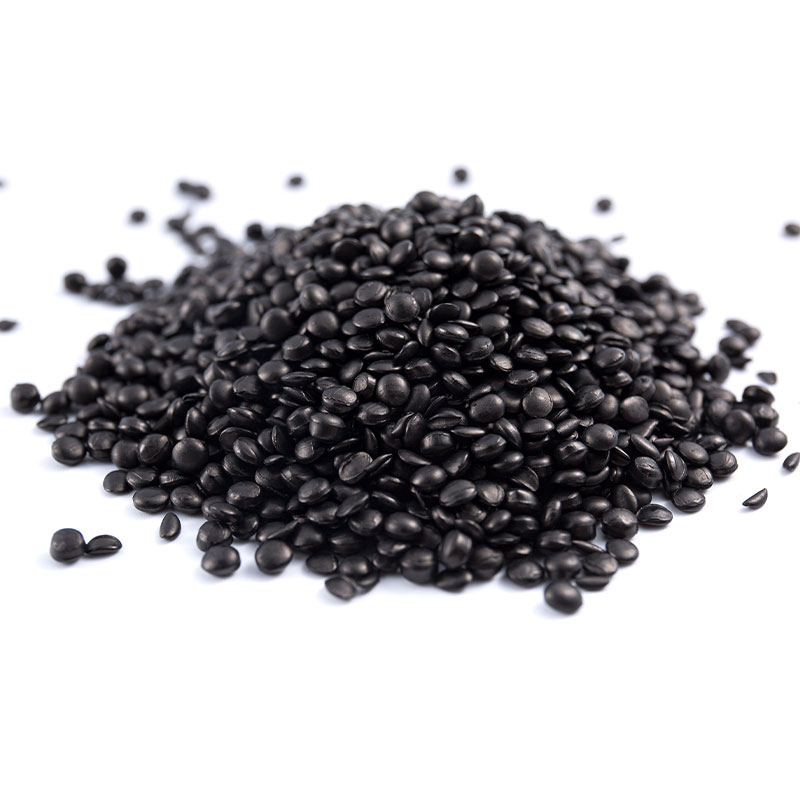 High-Hiding Black Concentrated Masterbatch for Thin-Film ExtrusionThis PE-based masterbatch with about 46% carbon black delivers strong opacity at low dosage, helping blown film processors reduce gels, cut costs, and maintain consistent color in agricultural and packaging films.View Product →
For automotive interior parts, the relevant performance indicators are low fogging, low odor, and color stability under hot, humid conditions. A low-volatile, environmentally friendly interior black masterbatch based on an appropriate carrier resin helps manufacturers meet interior emission targets while keeping a deep, consistent black on grained surfaces. This type of product is also specified for functional structural parts where retained impact strength after weathering is part of the engineering requirement.
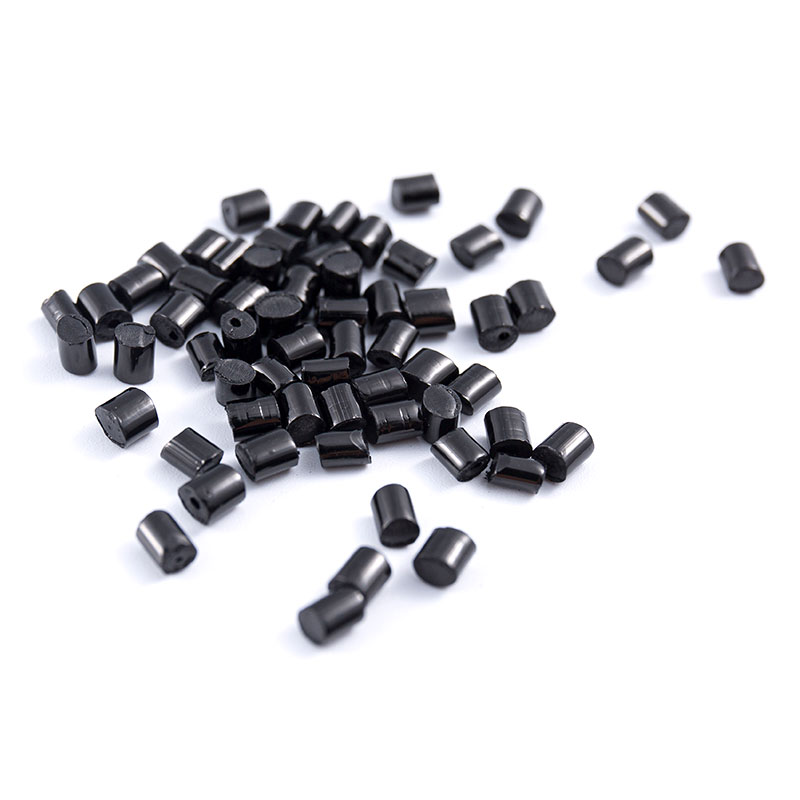 Low-Volatile Interior Black Masterbatch with AS CarrierDesigned for automotive and home interiors, this masterbatch combines low VOC emissions and low migration with stable blue-black coloring for ABS and PC, supporting consistent gloss and regulatory compliance.View Product →
Food contact applications are governed by migration limits and positive lists of approved substances. When selecting a masterbatch for food packaging film or food containers, the buyer should request the manufacturer's compliance documentation and confirm that the carbon black grade and additives meet the relevant regulations. High light-shielding black masterbatch designed for food packaging provides the opacity needed to protect light-sensitive contents, such as dairy products and certain processed foods, from photodegradation during shelf life.
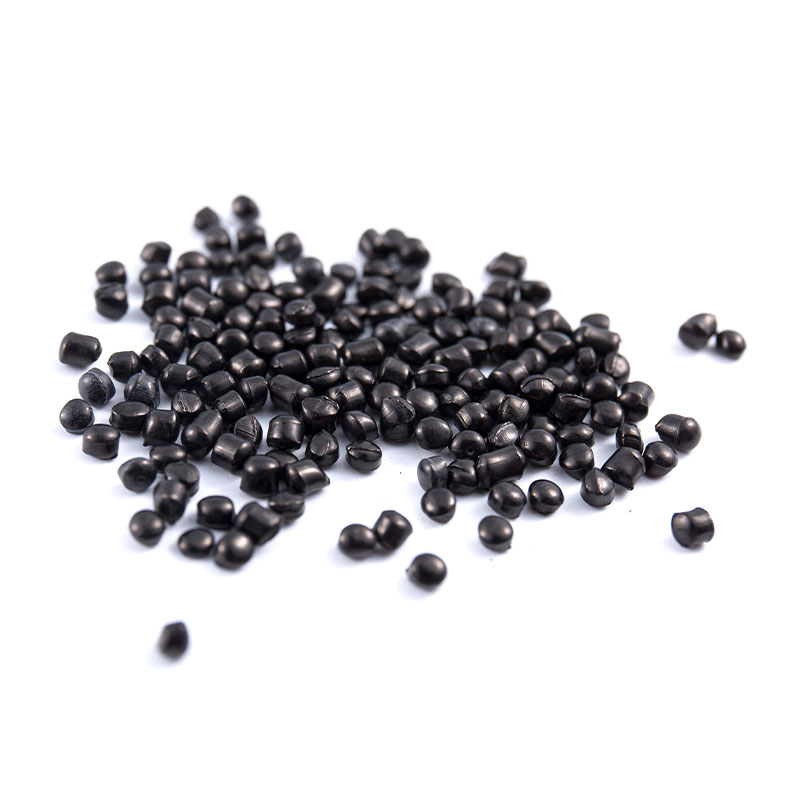 Light-Shielding Food Packaging Black MasterbatchA PE-based black masterbatch with roughly 40% carbon black and calcium carbonate filler, offering strong light blocking and aging resistance to protect light-sensitive food and extend shelf life.View Product →
For a deeper look at the regulatory side of this topic, our guide to food-contact black masterbatch compliance walks through the main requirements and practical testing steps for packaging converters.
How to Select the Right Black Masterbatch
Selecting a black masterbatch is a process of narrowing down from many possibilities to one or two candidates that fit the polymer, the process, and the end-use specification. The following sequence works well for most procurement departments and quality teams.
- Identify the base polymer and the process. Film, injection, blow molding, pipe, or compounding changes not only the carrier but also the carbon black loading and additive package.
- Define the target blackness and hiding power. A deep jet black requires fine carbon black and higher loading; for a dark gray, a lower loading may be adequate.
- List the regulatory requirements. Food contact, automotive interior, toys, and medical applications all have specific regulations that affect both carbon black and additives.
- Consider the processing conditions. Melt temperature, residence time, screw design, and output rate determine the required thermal stability and dispersion level.
- Request samples and run a controlled trial. A line trial on a full roll or a full shift is more meaningful than a laboratory plaque, because it exposes filter pressure, die build-up, and gel formation.
- Evaluate batch consistency. Ask the supplier for tint strength certificates and check whether the product can be delivered with the same specification over time.
A manufacturer with its own factory, a documented quality system, and application-specific product lines can generally offer more consistent recommendations than a trader who sources material from multiple origins. When the supplier is also the producer, the buyer can request formulation adjustments, custom carrier selection, and direct technical support during trials. Custom black masterbatch is not only about color; it is about adapting dispersion, additives, and carrier to the exact conditions of a particular production line.
Price is a poor indicator of quality on its own. Two products with the same carbon black content can differ significantly in dispersion quality, moisture control, and consistency. A slightly more expensive masterbatch that runs at 2% dosage instead of 3% can reduce the total cost per kilogram of finished product, because less masterbatch is needed to achieve the same color depth and hiding power.
Common Defects and How to Prevent Them
Most black masterbatch problems can be traced to dispersion quality, carrier compatibility, or moisture. The following table summarizes typical defects and their remedies.
| Problem | Likely Cause | Corrective Action |
|---|---|---|
| Surface streaks | Poor dispersion or carrier incompatibility | Switch to a high-dispersion grade; verify carrier compatibility |
| Gels or fish eyes | Carbon black agglomerates or contaminated base resin | Increase mixing intensity; check filter pressure; use cleaner masterbatch |
| Splay or silver marks | Excess moisture in masterbatch or base resin | Dry the masterbatch; check storage conditions |
| Color too weak | Let-down ratio too low or tint strength variation | Increase dosage; verify tint strength certificate |
| Black specks | Overheated polymer or degraded masterbatch | Reduce melt temperature; check residence time; check thermal stability |
| Die build-up | Volatile additives or condensation | Use low-VOC grade; reduce regrind level |
When a defect appears, the first step is always to check the basic data: melt temperature, dosage rate, and the moisture content of all incoming materials. Many converter problems disappear after simple corrections, but persistent streaks and gels usually point to the masterbatch itself. In that situation, the most effective move is to ask the supplier for a dispersion report and to compare the suspect batch against a reference batch under identical processing conditions.
Frequently Asked Questions
What is the difference between black masterbatch and carbon black powder?
Black masterbatch contains carbon black already dispersed and stabilized in a carrier resin. The processor simply feeds pellets into the extruder, avoiding dust, improving color consistency, and reducing the risk of agglomeration. Carbon black powder requires separate handling, dosing, and mixing equipment, and it is much harder to disperse uniformly in a melt.
How much black masterbatch should I add?
The typical let-down ratio is 1–4% by weight for most applications. Thin films that require high opacity may need 4–6%, and compounds for deep shades can go up to 8%. Always run a small-scale trial to confirm the minimum dosage that meets your target color and hiding power. Using more masterbatch than necessary increases cost and can reduce mechanical properties such as impact strength or elongation.
Can one black masterbatch be used for different polymers?
Sometimes, if the base polymers are compatible. LDPE-based masterbatch is frequently used in HDPE and PP blown film because all three are polyolefins and the carrier blends well. However, engineering plastics such as ABS, PC, PA, and PPS require a carrier that matches their chemical nature. Using a polyolefin masterbatch in polycarbonate will usually create streaks and reduce impact strength.
What does a supplier factory inspection tell me?
A factory visit reveals how the product is made: the quality of the carbon black storage, the accuracy of the weighing system, the shear intensity of the compounding line, and the laboratory equipment used for dispersion testing. These factors determine whether the supplier can maintain batch-to-batch consistency. A manufacturer with dedicated production lines for different carrier systems is generally better positioned to deliver consistent specialty grades.
Do I need a special black masterbatch for food contact products?
Yes. Food contact masterbatch must meet specific migration limits and use substances approved for food applications. Standard industrial black masterbatch may contain additives that are not authorized for food contact. Ask for a compliance declaration before purchasing, and verify that the declaration covers the exact processing conditions and food types you intend to use.
Why does my black film show a gray tint in thin areas?
Gray edges in thin spots are usually caused by insufficient carbon black loading or poor hiding power. A high-hiding masterbatch with fine carbon black and optimized dispersion will maintain opacity even at low film thickness. If the problem appears only after a change of supplier, the new product likely has a lower effective tint strength than the previous one.
Final Thoughts
Plastic masterbatch is a small input with outsized influence on product quality. For converters, the practical takeaway is simple: buy from a manufacturer who understands the polymer, the process, and the end-use conditions. A well-designed black masterbatch reduces waste, increases line speed, and protects the appearance of the final product. The cost difference between a poor masterbatch and a good one is often small; the cost of rejects, downtime, and customer complaints is much larger.
A reliable supplier should be able to answer four questions without hesitation: What is the base polymer? What is the let-down ratio? What is the dispersion performance? What quality certificates apply to your application? If the answers are clear, the black masterbatch will be the least worrying part of the entire production line.